



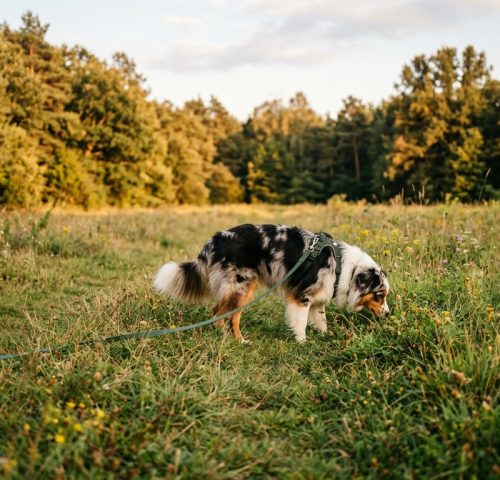

Most of us think of a dog walk as exercise — a chance for our pup to stretch their legs, burn some energy, and do their business before heading back inside. But here is the thing: a brisk march around the block on a short leash, while physically useful, does very little for the one thing your dog uses most to understand the world around them — their nose.
Sniff walks and decompression walks are a completely different kind of outing. They are slower, quieter, and entirely dog-led. And according to trainers, behaviorists, and the dogs themselves, they may be the single most valuable thing you can add to your pup’s weekly routine.
What Is a Sniff Walk?
A sniff walk — sometimes called a “sniffari” — is a walk where your dog is given full permission to follow their nose wherever it leads. There is no heel command, no pace to keep, and no route to stick to. The dog decides what to investigate, how long to spend on each smell, and which direction to go next.
It typically takes place on a longer leash — usually four to six metres — in a relatively calm environment, such as a park, a quiet street, or a grassy area. The key is that the human follows the dog, not the other way around.
What Is a Decompression Walk?
A decompression walk takes the sniff walk concept one step further. According to the Wisconsin Humane Society, a decompression walk is a dog-led walk that allows freedom of movement in nature — much different from a typical neighbourhood walk, giving dogs choice, physical stimulation, and the chance to engage naturally at their own pace.
While a sniff walk can happen in an urban or suburban setting, decompression walks ideally take place in natural, low-traffic environments — open fields, forest trails, lakesides, or any space where the dog can truly decompress from the noise and pace of everyday human life. Both types are enormously beneficial, but the decompression walk offers a deeper level of mental and emotional reset.
How They Differ from a Regular Walk
On a standard leash walk, most dogs are working hard — staying close to you, navigating distractions, managing their impulses, and absorbing a constant stream of overstimulating sights, sounds, and smells they have no control over. As Rover notes, 20 minutes of sniff-led exploration on a long line can be more satisfying than a 60-minute heeled walk on a busy sidewalk where every sight and smell is a source of frustration or stress.
The difference is not just physical — it is neurological. During a sniff walk, your dog is processing the world on their own terms, making choices, and engaging in the behaviours they were built for.
Why Sniffing Is So Powerful for Dogs
To understand why sniff walks matter so much, it helps to understand just how extraordinary a dog’s sense of smell really is.
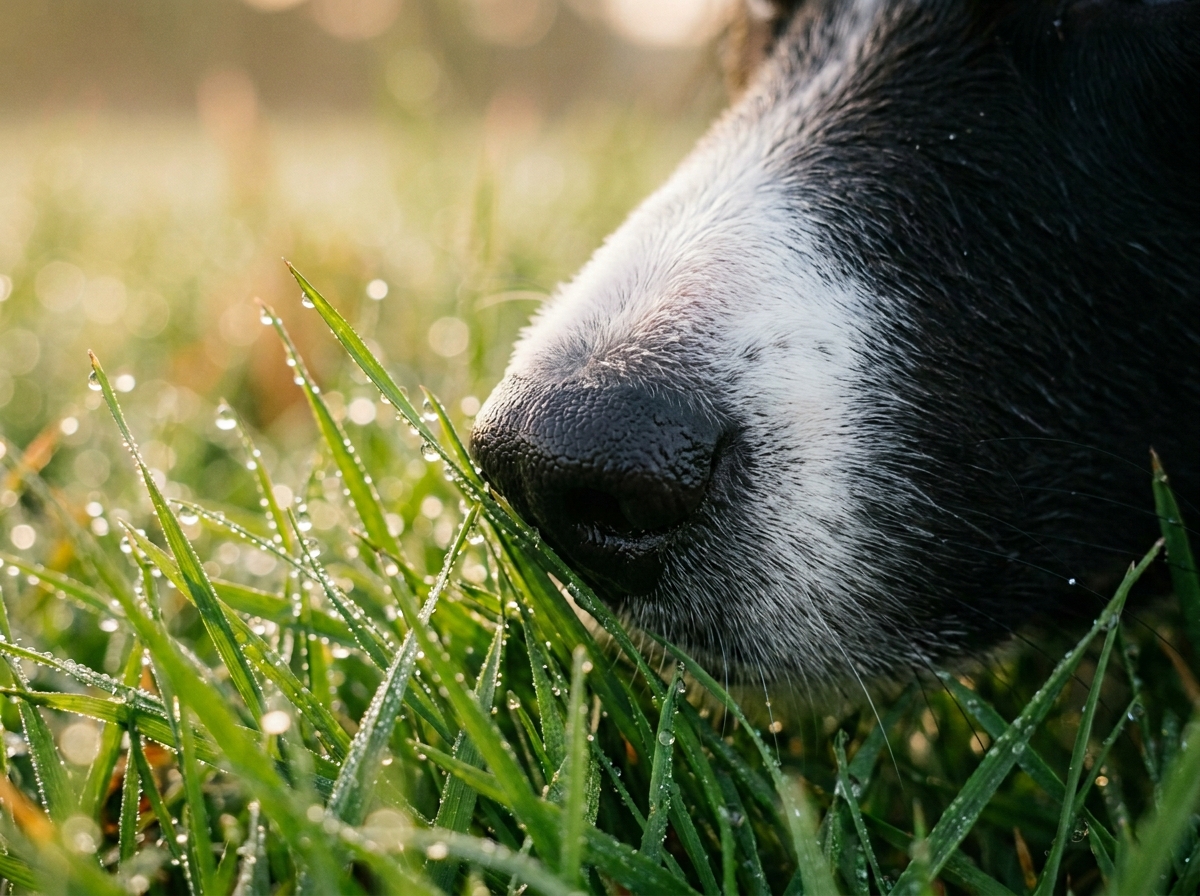
According to the American Kennel Club, dogs have up to 300 million olfactory receptors in their noses, compared to about 6 million in humans — and the part of a dog’s brain that analyses smells is proportionally 40 times larger than ours. Scent is their dominant sense in the same way that vision is ours. When a dog sniffs a patch of grass, they are reading a full story — who was there, when, what they ate, and how they were feeling.
Sniffing Reduces Stress
According to Adolescent Dogs, sniffing lowers cortisol and boosts dopamine — the feel-good hormone — while helping dogs feel more in control of their environment. Even a few minutes of scent-based activity can help calm an anxious or reactive dog. This is not anecdotal. Researchers studying dog behaviour have consistently found that scent work produces measurable physiological changes, including a slowing of the heart rate and a reduction in stress indicators.
Mental Enrichment That Truly Tires Them Out
If you have ever wondered why your dog comes home from a sniff walk calmer and more settled than after a run, this is why. According to Tails of Connection, sniffing lowers a dog’s pulse and has an almost immediate calming effect — making it one of the most efficient ways to genuinely tire out a mentally busy dog.
This connects directly to what we know about mental enrichment for dogs. If you already use puzzle toys and brain games at home, sniff walks are the outdoor equivalent — and the two work beautifully together. For more indoor enrichment ideas that pair well with sniff walks, take a look at our post on brain games and interactive toys for dogs.
Which Dogs Benefit Most from Sniff Walks?
The short answer is every dog. But some dogs stand to gain even more.
Reactive and Anxious Dogs
According to A-Z Animals, decompression walks are beneficial for any dog but are especially valuable for dogs who are reactive, fearful, or dealing with anxiety and chronic stress. The goal is calmness and relaxation — giving your dog the freedom to engage in natural behaviours helps reset their nervous system and can produce meaningful improvements in day-to-day behaviour.
For reactive dogs especially, traditional walks on busy streets are a recipe for stress accumulation. Each trigger — another dog, a cyclist, a jogger — adds to what trainers call the “stress bucket.” Decompression walks in quieter spaces allow that bucket to drain rather than overflow.
High-Energy and Adolescent Dogs
Adolescent dogs with what seems like boundless energy often behave better after sniff walks than after vigorous exercise. That is because physical exercise alone does not address the mental component of their energy. As Clickstart Dog Academy points out, the traditional march around the neighbourhood on a short leash offers very little real enrichment — and most dogs spend those walks with almost no opportunity to simply sniff, explore, and be a dog.
Senior Dogs
As dogs age and their physical abilities slow down, sniff walks become even more valuable. A senior dog who can no longer sustain a long run can still get enormous mental and emotional benefit from a slow, exploratory wander at their own pace. The gentle physical movement combined with rich cognitive engagement is ideal for aging joints and aging minds alike. For a full guide on supporting your dog through their senior years, our Complete Guide to Golden Years Wellness covers everything from exercise to nutrition for older dogs.
How to Do a Sniff Walk: A Simple Step-by-Step Guide
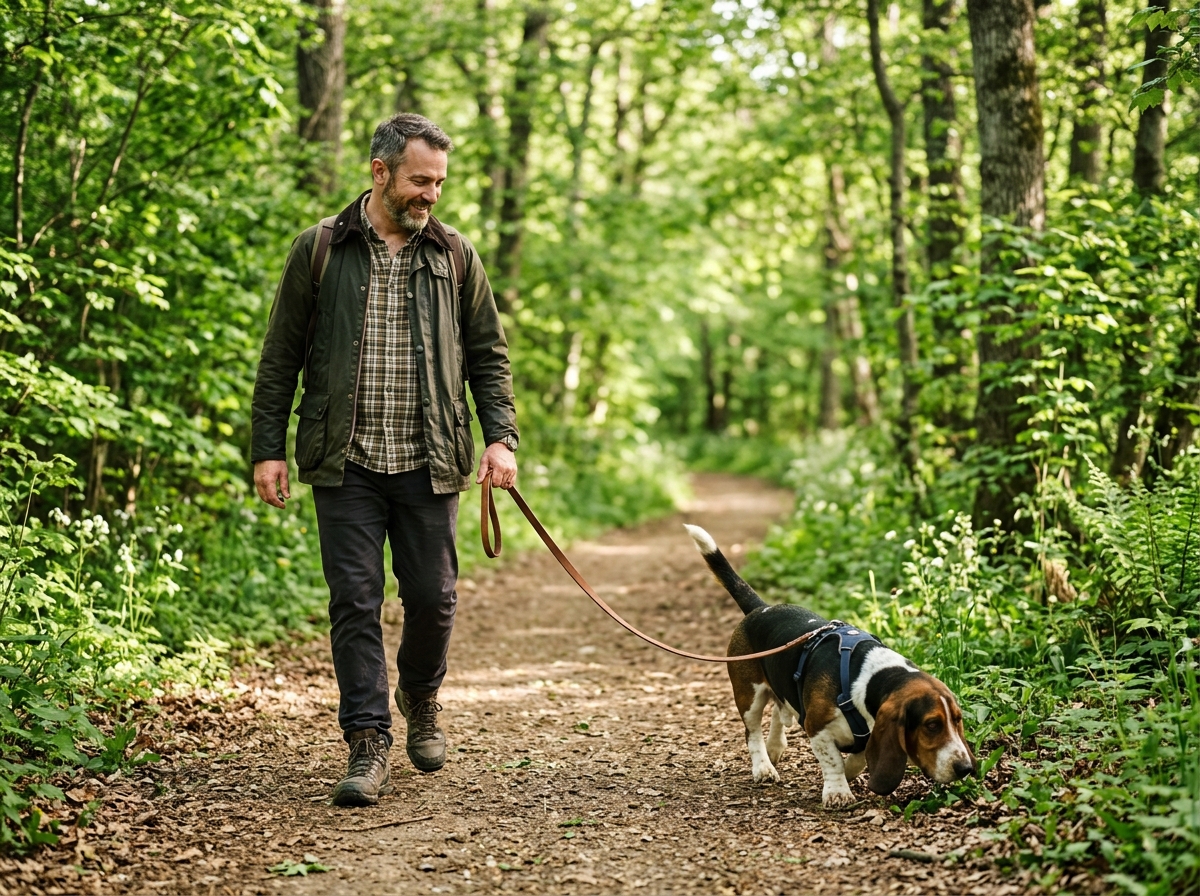
Getting started with sniff walks requires almost no preparation — just a willingness to slow down and follow your dog’s lead.
Step 1 — Choose the Right Leash
Swap your standard four-foot lead for a long line — ideally five to ten metres. This gives your dog genuine freedom of movement without the risks of being fully off-leash in an unfenced area. A comfortable harness is preferable to a collar for long-line work, as it distributes any light tension more safely across the body.
Step 2 — Pick a Low-Stimulation Environment
Start in a calm, familiar area with relatively low foot traffic. A local park, a quiet trail, or even a large grassy area works well. Avoid busy streets or dog parks where your dog will be constantly interrupted by other dogs and people — the goal is freedom to explore, not social overload.
Step 3 — Let Your Dog Lead
This is the hardest part for most owners. Resist the urge to steer, redirect, or move your dog along when they spend four minutes sniffing the same lamppost. That lamppost is a message board to your dog. Let them read it fully. Follow wherever they want to go, keep the leash loose, and trust the process.
Step 4 — Drop All Commands for the Duration
A sniff walk is not a training session. Save the sits, stays, and heels for another time. The purpose of this walk is decompression and freedom — which means your dog should experience the walk as a genuine break from the demands of human life. The absence of expectations is part of what makes it so restorative.
Step 5 — Start Short and Build Up
Even 15 to 20 minutes of true sniff walking is more mentally enriching than an hour of structured exercise. Start there and increase the length and frequency as you both get comfortable with the slower pace. Once or twice a week is a good starting point; daily sniff walks are ideal if your schedule allows.
Easy Ways to Make Any Walk More Sniff-Friendly
You do not have to overhaul your entire walking routine to give your dog the benefits of scent-led exploration. Small adjustments to your regular walks can make a significant difference.
Add a “Sniff Break” Signal
Some trainers recommend teaching a release word — something like “go sniff” or “free time” — that lets your dog know the next portion of the walk is theirs to direct. This works especially well if you mix structured walking with sniff breaks, allowing your dog to transition between modes with a clear cue.
Try Scatter Feeding on Walks
According to Off Leash MKE, adding scent work games to your walks can further enhance relaxation, confidence, and focus. One simple option is scatter feeding — tossing a handful of treats into the grass or leaves and letting your dog sniff them out.
Explore New Routes Regularly
A new environment means a completely fresh palette of smells for your dog — which multiplies the cognitive engagement of every walk. Rotating your walking routes even slightly keeps the experience novel and stimulating. A trail your dog has never sniffed before is genuinely more enriching than the same familiar street, no matter how much they enjoy it.
What to Expect the First Few Times
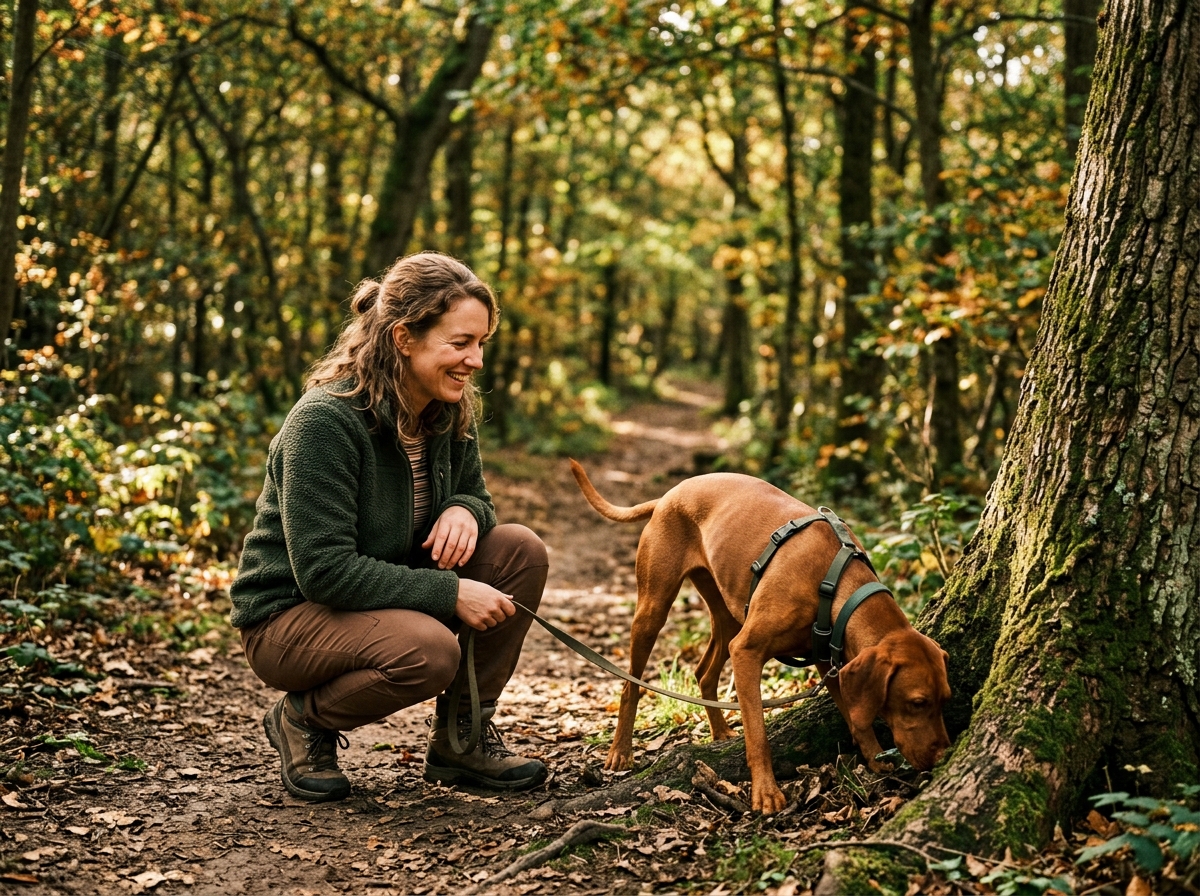
Many dogs — particularly those who have never been given this kind of freedom on a walk — take a few sessions to fully relax into it. As trainer and behaviour consultant Sarah Stremming puts it via Agape Dogs Co., decompression walks have no cues, no commands, and no expectations — dogs get to lead the way, and you get to let them. Dogs accustomed to structured walks may move quickly at first, but they soon slow down once they realise the entire walk is theirs.
Give it time. After a few sessions, most dogs begin to visibly settle — their posture softens, their pace slows, their breathing deepens. That is decompression happening in real time. And many owners report feeling the same effect themselves. Walking slowly through a park with no agenda, watching your dog read the world with their nose, turns out to be remarkably good for human mental health too.
For more practical ideas on caring for your dog’s wellbeing inside and out, explore our Care Tips and Health & Wellness categories here on The Dog Blog.
Final Thoughts
We spend a lot of time trying to figure out how to tire our dogs out. The answer, it turns out, has been right under their noses the whole time.
Sniff walks and decompression walks are not a trend or a training technique — they are simply an acknowledgment of what dogs are, and what they need. They are hunters and scavengers with extraordinary noses and a deep biological drive to explore the world through scent. Every time we give them the space to do that, we are meeting one of their most fundamental needs.
You do not need special equipment, a specific location, or any particular expertise. You just need a long leash, a patch of grass, and the willingness to follow wherever that nose leads. Your dog will do the rest.