



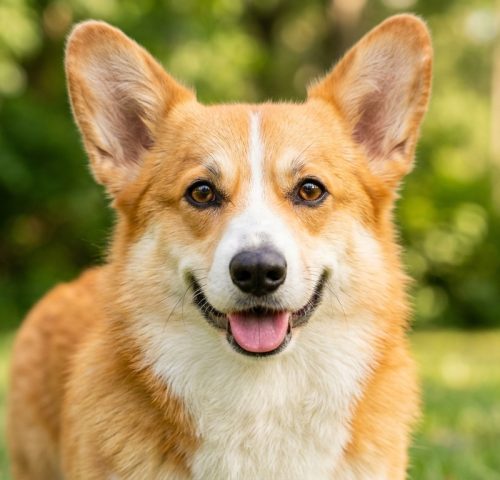
Your dog is talking to you right now. Not with words — but with the angle of their ears, the tension in their shoulders, the position of their tail, and the look in their eyes. They have been communicating this way their entire lives. The question is whether we are listening.
Most dog owners are surprised to learn just how much their dog has been trying to tell them — and equally surprised to discover how often those signals get misread. A wagging tail does not always mean a happy dog. A dog showing their belly is not always asking for a belly rub. A yawn does not always mean they are tired.
Learning to read your dog’s body language is one of the most valuable things you can do as a pet parent. It deepens your bond, helps you respond to their needs more accurately, and — in some situations — can prevent bites, accidents, and unnecessary stress for both of you. This guide walks you through the signals your dog uses every single day.
Why Reading Dog Body Language Matters
Dogs evolved alongside humans for thousands of years, developing a remarkably sophisticated system of visual communication. Unlike humans, who rely primarily on spoken language, dogs communicate almost entirely through their bodies. According to Texas A&M University’s College of Veterinary Medicine, understanding a dog’s basic body language allows owners to gain genuine insight into their thoughts and feelings about the world around them — and what they are experiencing in any given moment.
The consequences of misreading those signals are real. One of the most common statements veterinary behaviourists hear is “he gave no warning” after a dog bites. In almost every case, the warning was there — it was simply not recognised. According to Dogster, stress and fear signals consistently appear before growling or biting, and recognising early signs of discomfort can prevent escalation entirely.
Reading body language also makes you a more empathetic owner. When you know your dog is stressed at the vet, you can advocate for them. When you see that they are uncomfortable being approached by a stranger, you can step in. When you recognise that they are content and relaxed, you can simply enjoy that moment with them.
The Golden Rule: Read the Whole Dog
Before diving into individual signals, the single most important principle to understand is this: never judge your dog’s mood by one body part alone. According to PetMD, dog body language must always be read as a whole — a wagging tail combined with a stiff body and hard eyes tells a completely different story from a wagging tail with a loose, wiggly body and soft eyes.
Think of your dog’s body language as a sentence. The tail is one word. The ears are another. The posture, the eyes, the mouth — they all form part of the same sentence. Read the sentence, not just the word.
What Your Dog’s Tail Is Really Saying
The tail is the most watched part of a dog’s body — and the most misunderstood. Most people equate a wagging tail with a happy dog, but the reality is considerably more nuanced.
Tail Position
According to board-certified veterinary behaviourist Dr. Kelly C. Ballantyne, as cited by Chewy, tail position communicates your dog’s emotional state in the following ways:
- High and stiff: Alert, aroused, or potentially preparing for conflict — not necessarily friendly
- High and loose, with broad sweeping wags: Genuinely happy and relaxed
- Neutral or mid-height: Calm and comfortable in their environment
- Low or slow wag: Uncertain or mildly anxious
- Tucked between the legs: Fearful, stressed, or submissive
The Direction of the Wag
Research has shown that the direction of a tail wag carries meaning too. According to Ask A Vet, a right-biased wag is linked to positive emotions while a left-biased wag signals caution or negative arousal — reflecting how opposite brain hemispheres govern different emotional states.
A Note on Breed Differences
Tail communication is not equal across all breeds. Dogs with naturally short, curled, or docked tails — such as Pugs, French Bulldogs, or some working breeds — have a significantly reduced ability to communicate through tail position. This can lead to miscommunication with other dogs and with people. If you have a short-tailed breed, pay even closer attention to their overall body posture and facial expressions to compensate.
Ears, Eyes, and Facial Expressions
The face is where subtle emotion is most visible in dogs — and where owners most often miss important signals.
Ear Position
Ear position varies by breed — a Basset Hound’s ears simply cannot move the way a German Shepherd’s can — but the principle is consistent. Forward-facing ears indicate alertness and engagement. Ears held flat or pinned back signal fear, submission, or anxiety. Ears that are flickering or rapidly changing position often indicate uncertainty or internal conflict.
Eye Signals
The eyes offer some of the clearest emotional signals of all. Soft, slightly squinted eyes with relaxed lids signal calm contentment. Hard, round, unblinking eyes signal threat or high arousal. According to NJ Dog’s body language guide, whale eye — where the whites of the eyes become visible as the dog turns their head but keeps their gaze fixed — is a reliable precursor to a bite. If you see this, stop what you are doing, avoid direct confrontation, and slowly create distance between your dog and whatever is causing the stress.
Mouth and Facial Tension
A relaxed, slightly open mouth with a loose tongue is a reliable sign of a comfortable dog. A closed, tight mouth signals tension. Lip licking — especially when not near food — is a stress signal. As the AKC explains, yawning is a calming signal — dogs use it to de-escalate tension in themselves and others. A dog yawning during a hug, a vet visit, or a training session is communicating stress, not sleepiness.
Posture and What the Whole Body Tells You
Beyond individual body parts, the overall posture and weight distribution of your dog communicates a great deal about their emotional state.
Signs of a Relaxed, Happy Dog
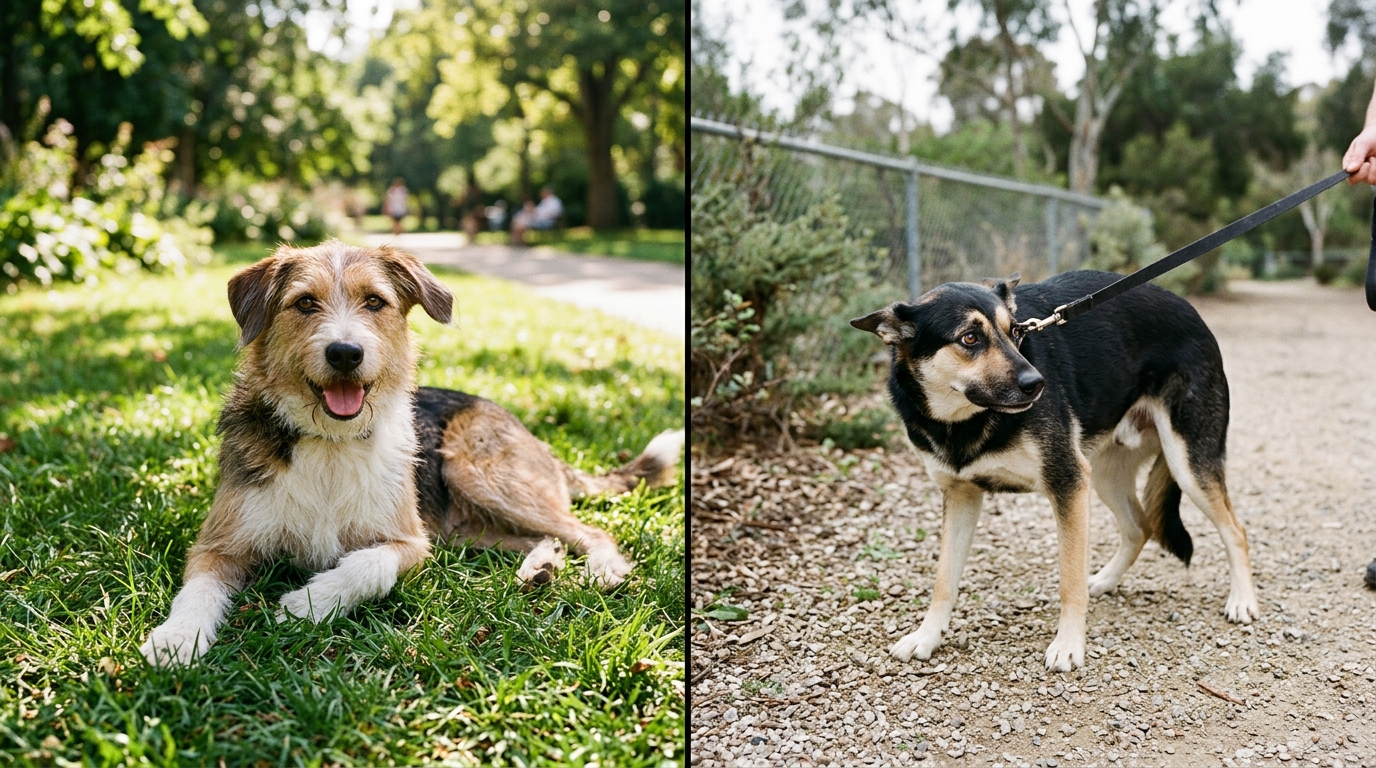
According to BARK’s body language guide, when your dog is relaxed in a safe environment, their entire body and tail are loose and comfortable — not stiff — and they stand confidently without lurching forward or backward. You will notice a loose, wiggly quality to their movements — their whole body may shift from side to side when they greet you. This is a dog who feels safe, content, and comfortable in their environment.
The Play Bow
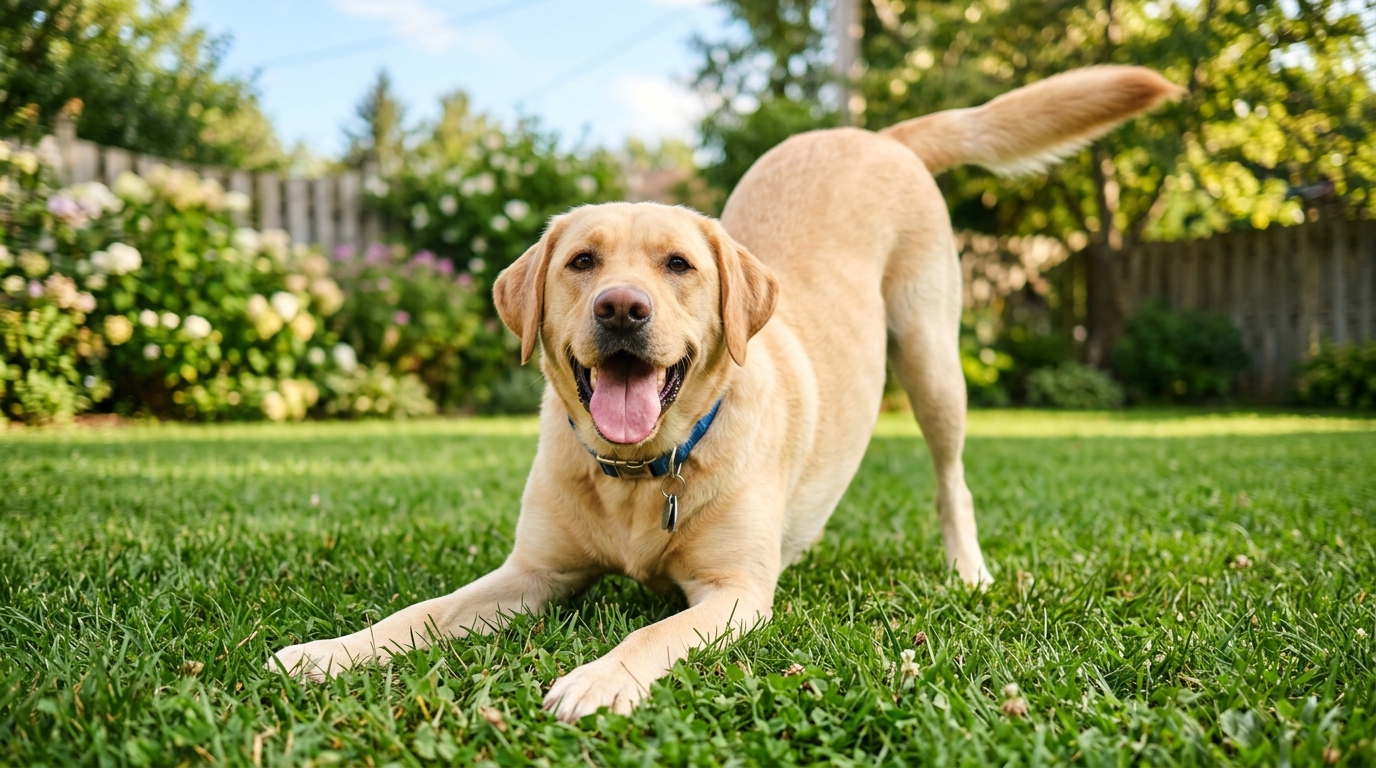
One of the clearest and most universally understood signals in canine communication is the play bow — front legs stretched forward and down, rear end raised, tail wagging. This is a deliberate, unambiguous invitation to play. It is also used mid-play to reset the mood and signal that any rough behaviour was just play, not aggression.
Signs of Stress or Fear
A dog who is afraid will often try to make themselves smaller — lowering their body toward the ground, tucking their tail, and avoiding eye contact. They may also show what trainers call “calming signals” — small behaviours designed to de-escalate a situation, including yawning, lip licking, turning the head away, sniffing the ground suddenly, or shaking off as if wet when they are perfectly dry. These signals are your dog politely asking for space or relief from a stressful situation.
Signs of High Arousal or Potential Aggression
A dog who is highly aroused or preparing for conflict will do the opposite — they will make themselves larger. Their posture stiffens, their weight shifts forward, their hackles may rise along the spine and shoulders, and their gaze becomes hard and fixed. As Stylla Care explains, canine behaviourists refer to the “Ladder of Aggression” — a progression of increasingly serious signals that dogs display when earlier, subtler communications are ignored. By the time a dog reaches growling or snapping, they have almost always tried to communicate their discomfort many times over in quieter ways first.
Common Signals People Get Wrong
Even experienced dog owners regularly misread a handful of very common signals. Here are the ones that cause the most confusion.
The Belly Roll
Rolling onto their back and exposing their belly is one of the most misunderstood postures in dogs. While it often is an invitation for a belly rub, it can also signal anxiety and a desire for space. The key is to look at the rest of the body. A dog who rolls over with a loose body, relaxed face, and soft eyes is inviting contact. A dog who rolls over with a tense body, stiff limbs, and averted gaze is communicating submission or discomfort and may not welcome being touched at all.
The “Guilty Look”
The expression owners interpret as guilt — lowered head, averted gaze, flattened ears, tucked tail — is actually a response to your body language and tone of voice, not evidence of understanding what they did wrong. Research consistently shows that dogs display this posture in response to an owner’s stern approach regardless of whether they actually did anything. It is a submission and appeasement signal, not a confession.
The Freeze
When a dog goes completely still — especially during an interaction — it is one of the most serious warning signals they can give. A freeze often immediately precedes a bite. If you see your dog freeze during play, petting, or any interaction, stop immediately, remove any triggers calmly, and give them space. This is a signal that should never be ignored or pushed through.
Putting It Into Practice Every Day
Understanding dog body language is not a one-time lesson — it is a skill you develop through consistent observation. Here are some practical ways to sharpen it.
- Watch your dog in calm environments first. Learn what relaxed looks like for your specific dog before trying to read stress or arousal. Every dog has their own baseline.
- Observe context. The same signal means different things in different situations. A yawn at bedtime is tiredness. A yawn while being hugged by a child is stress.
- Teach your whole household. Children are often the recipients of body language that goes unread. Teaching kids to recognise the hard stare, the stiff body, and the whale eye can prevent bites before they happen.
- Respect what you see. If your dog is signalling discomfort — through calming signals, avoidance, or tension — respond to it. Remove the trigger, give them space, or change the situation. Acknowledging their communication builds trust over time.
Understanding how your dog communicates is deeply connected to how you train and interact with them every day. For practical training guidance that puts communication at the centre, visit our post on dog training tips every pet parent should know. And if you want to go further with mental enrichment — giving your dog ways to engage their mind alongside their body — our guide on brain games and interactive toys is a great next read.
Final Thoughts
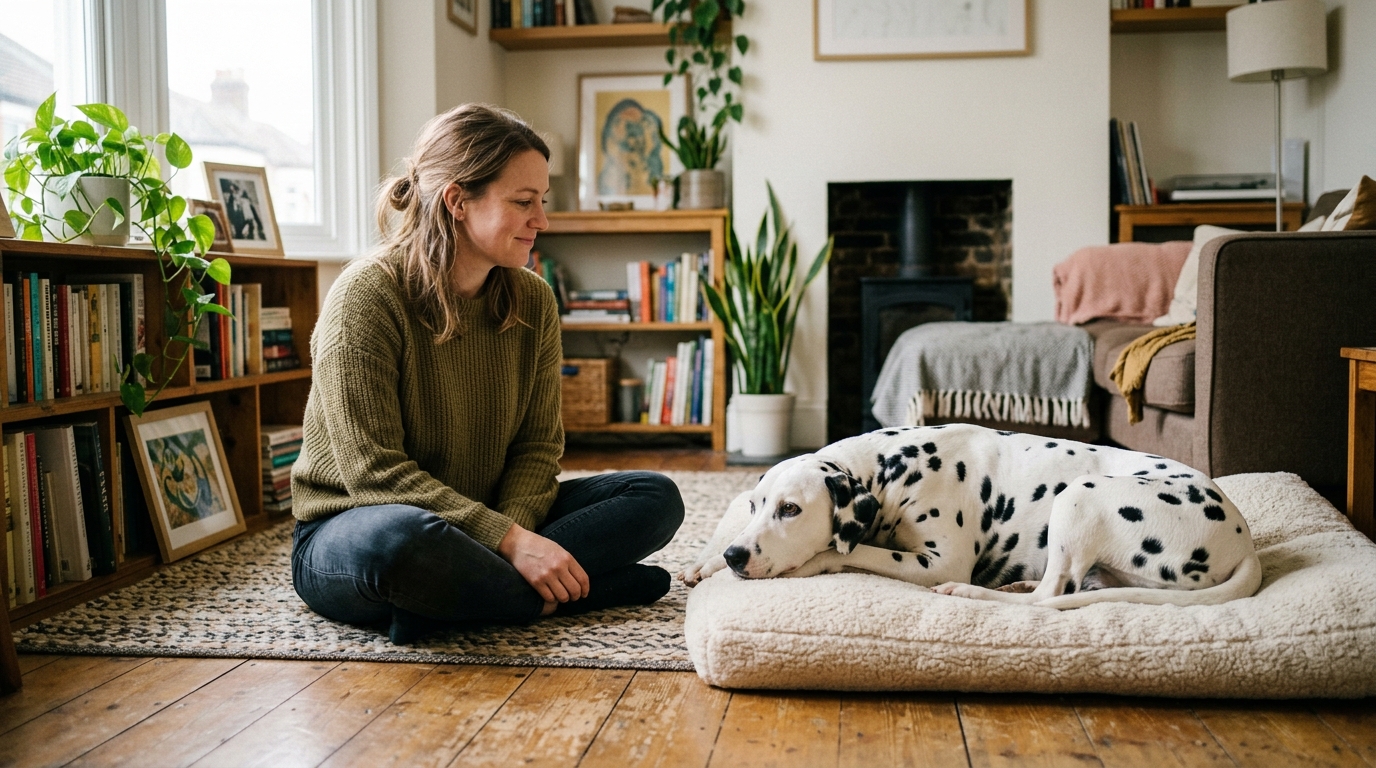
Your dog is one of the most expressive creatures you will ever share your life with. They are not silent — they are simply speaking a language that takes a little time and attention to learn. Every flick of the ear, every shift in posture, every slow tail wag or sudden freeze is a word in an ongoing conversation they are always trying to have with you.
The more fluent you become in that language, the richer your relationship becomes. You stop reacting to your dog’s behaviour and start understanding it. And when you understand it, you can meet their needs more fully, protect them more effectively, and share your life with them in a way that is genuinely built on mutual trust.
That, in the end, is what they have always been asking for. For more on life with dogs — the stories, the quirks, and the bonds that make it all worthwhile — explore our Care Tips and Training Tips categories here on The Dog Blog.