





You love your dog more than you can put into words. So when something goes wrong — a sudden limp, an unexpected lump, or a middle-of-the-night emergency — the last thing you want is to be forced into a heartbreaking choice between your dog’s health and your bank account.
That’s exactly where pet insurance steps in. But with premiums, deductibles, reimbursement rates, and exclusions all thrown at you at once, it’s easy to feel overwhelmed. Is it actually worth it? What does it cover? And when is the right time to get it?
This guide breaks everything down so you can make a confident, informed decision for your pup — and your wallet.
Why Vet Costs Are Higher Than Ever in 2026
Before asking whether pet insurance is worth it, it helps to understand why vet bills have gotten so steep. Veterinary medicine has advanced enormously over the past decade. Dogs can now receive MRI scans, chemotherapy, joint replacement surgeries, and specialist consultations that simply were not available or affordable before.
Those advances come at a price. According to data from the Bureau of Labor Statistics, the cost of veterinary services in urban areas jumped 7.9% in a single year between February 2023 and February 2024. A surgery that once cost $2,000 can now involve advanced imaging, a board-certified specialist, and a full surgical team — bringing the total closer to $10,000.
Emergency situations, in particular, can catch pet owners completely off guard. In 2024 alone, 37% of pet owners ended up in debt because of a medical emergency, and over half admitted they would have to reach for high-interest credit cards to cover a sudden $1,000 vet bill.
Understanding your dog’s health needs — especially as they age — is a big part of being a prepared pet parent. If you want a deeper look at what to expect as your dog gets older, our Complete Guide to Golden Years Wellness is a great starting point.
What Does Pet Insurance for Dogs Actually Cover?
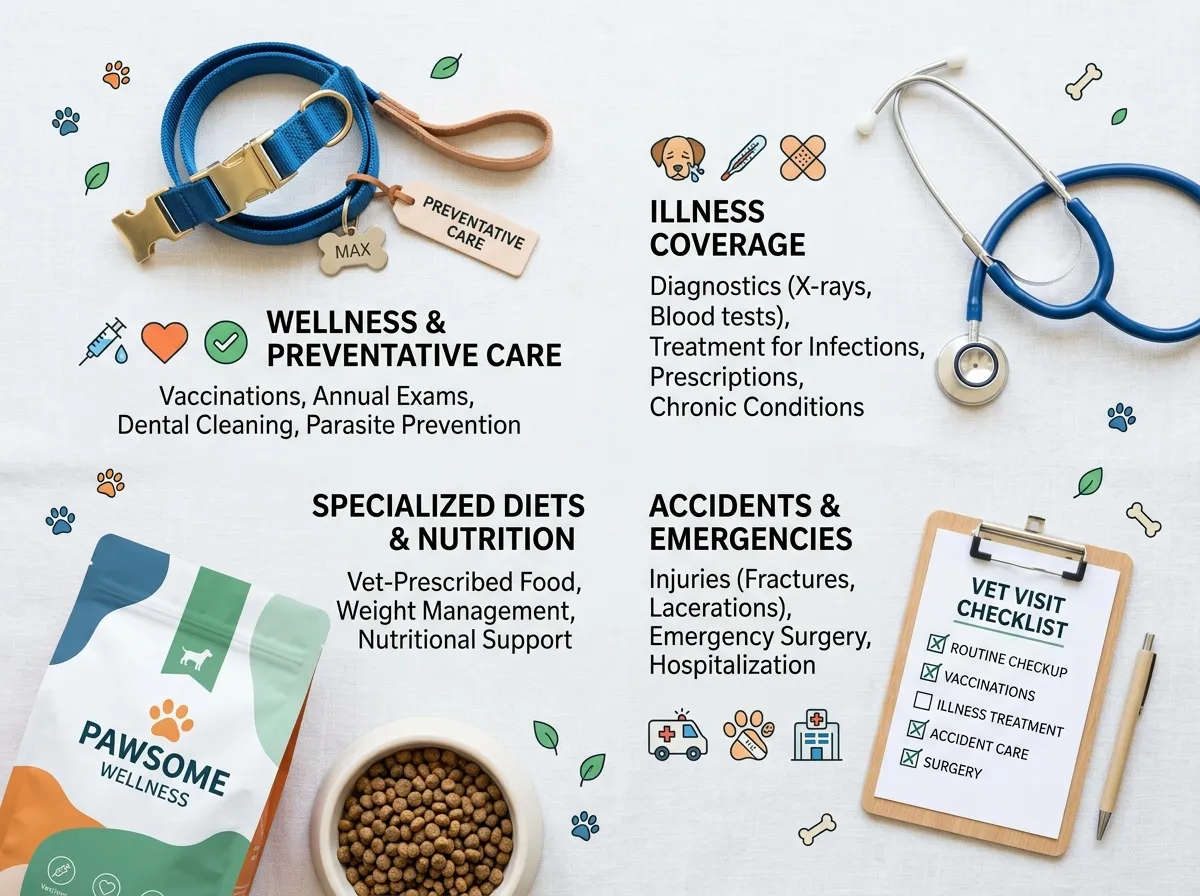
Pet insurance is not a single product — it comes in several tiers, and understanding the differences will save you from unpleasant surprises later.
Accident-Only Plans
These are the most affordable option, typically starting around $15 to $25 per month. They cover injuries from accidents — broken bones, swallowed objects, lacerations, and similar emergencies. They do not cover illnesses. This can be a solid choice if budget is tight, but it leaves a significant gap for common conditions like infections, cancer, or diabetes.
Accident and Illness Plans
The most popular type of coverage. The average cost of an accident and illness policy for dogs in the U.S. is $62.44 per month, with a typical range of $37 to $73 per month depending on your dog’s breed, age, and your location. These plans cover diagnostics, surgeries, hospitalizations, prescriptions, and treatment for most illnesses and injuries.
Wellness Add-Ons
Many insurers offer optional wellness riders for an additional fee. These cover routine care — vaccines, annual checkups, dental cleanings, flea and tick prevention, and microchipping. While they increase your monthly premium, they can help offset the steady, predictable costs of keeping your dog healthy year-round.
What Is Typically Not Covered
Most policies do not cover pre-existing conditions — meaning health issues your dog had before the policy started. Bilateral conditions (problems that can affect both sides of the body, like hip dysplasia) are another common exclusion. Cosmetic procedures and experimental treatments are also generally outside the scope of standard plans. Reading the fine print carefully before signing is essential.
How Much Does Pet Insurance Cost in 2026?
Cost is the number one factor most dog owners weigh when deciding on coverage. Here is a realistic picture of what you can expect to pay.
Average Monthly Premiums for Dogs
Depending on the plan and provider, dog insurance in 2026 ranges from $20 to $70 per month for most pet parents. The national average for a comprehensive accident and illness plan sits around $44 to $62 per month. Accident-only coverage runs significantly less.
What Affects Your Premium
Several factors push your monthly cost up or down:
- Breed: Breeds prone to hereditary conditions — like French Bulldogs, German Shepherds, or Golden Retrievers — tend to carry higher premiums. Mixed breeds are often the cheapest to insure because of their genetic diversity.
- Age: Younger dogs cost far less to insure. Premiums typically increase by 15 to 25% per year for senior dogs, and a policy that cost $35 per month at puppyhood can reach $80 per month by age 10.
- Location: Urban areas with higher living costs tend to have more expensive premiums than rural areas.
- Coverage level: Your chosen deductible, annual limit, and reimbursement percentage (typically 70%, 80%, or 90%) all affect the final monthly cost.
The Cost of Not Having Insurance
Statistically, 1 in 3 pets need emergency care each year, and over a lifetime, the majority of dogs will face at least one health expense exceeding $2,000. One major event — a foreign body surgery, a torn ligament, or a cancer diagnosis — can easily exceed the total premiums paid over several years.
Is Pet Insurance Worth It for Your Dog?
This is the question everyone really wants answered — and the truth is, it depends on your specific situation.

When Pet Insurance Makes Strong Financial Sense
Pet insurance tends to deliver the most value in these situations:
- You have a puppy or young dog — getting in early means lower premiums and no pre-existing exclusions.
- You own a breed known for expensive health conditions (Bulldogs, Dachshunds, Cavalier King Charles Spaniels, and large breeds prone to orthopedic issues).
- A sudden $3,000 to $5,000 vet bill would cause real financial stress in your household.
- You want peace of mind that treatment decisions will be driven by what is best for your dog, not by cost.
Nearly half of pet owners say unexpected vet costs caused financial concerns in 2025, according to the American Animal Hospital Association. And while only 34% of policyholders in a recent Consumer Reports survey said they had saved more on premiums than they spent, roughly 67% still felt their coverage was worth the cost.
When You Might Skip It
Pet insurance may not be the right fit if your dog is already in their senior years with significant pre-existing conditions, as coverage may be limited and premiums will be high. If you have a robust emergency fund — enough to comfortably absorb a $4,000 to $5,000 surprise expense — self-insuring by setting aside $50 to $100 per month in a dedicated savings account is a reasonable alternative.
The Best Time to Enroll Is Earlier Than You Think
The single most common regret among pet insurance buyers is waiting too long. Once a condition develops, it becomes a pre-existing exclusion. Most providers accept dogs as young as seven or eight weeks old, and policies are consistently cheapest when a dog is young and healthy. If you are bringing home a puppy, consider getting a quote within the first few weeks.
How to Choose the Right Pet Insurance Plan
With dozens of providers on the market, comparing plans can feel like a full-time job. Here is what to focus on.
Key Terms to Understand
- Premium: Your monthly or annual payment to keep the policy active.
- Deductible: The amount you pay out of pocket before the insurer reimburses you. Annual deductibles are typically more cost-effective than per-incident deductibles.
- Reimbursement rate: The percentage of eligible costs the insurer pays after your deductible. Most plans offer 70%, 80%, or 90%.
- Annual limit: The maximum the insurer will pay in 12 months. Some providers offer unlimited annual coverage.
Questions to Ask Before You Sign
Before committing to a plan, ask these questions:
- Does the policy cover hereditary conditions specific to my dog’s breed?
- What is the waiting period before coverage kicks in — and does it differ for orthopedic injuries?
- Does the premium increase significantly with my dog’s age at each renewal?
- Are there any caps on specific conditions or treatments?
- Is dental illness included, or is it a separate add-on?
Reading the fine print carefully — especially around waiting periods for specific conditions — can prevent costly surprises. As one licensed insurance producer puts it, a policy might list a 10-day general waiting period but include a separate 6-month wait for cruciate ligament injuries. For breeds prone to knee problems, that distinction matters enormously.
Well-Known Providers Worth Comparing
There is no single best provider for everyone, but a few names consistently appear in top-rated lists: Figo (known for its option for 100% reimbursement), Pumpkin, MetLife, Pets Best, Spot Pet Insurance, and Embrace. Comparing plans across multiple providers is the best way to find coverage that fits your dog’s specific needs and your budget.

Pet Insurance and Your Dog’s Long-Term Health
Beyond the numbers, pet insurance has a real effect on the kind of care dogs receive. When owners are not stressed about cost, they are far more likely to pursue the best treatment option — not just the most affordable one. Vets report that insured patients are more likely to receive recommended diagnostics, surgeries, and specialist referrals.
This is especially meaningful for dogs dealing with chronic conditions. Diabetes, arthritis, and heart disease all require long-term management. Without coverage, the monthly cost of medications and follow-up visits adds up quickly. With a solid plan in place, you can focus on your dog’s comfort and quality of life rather than rationing care.
Keeping your dog protected goes beyond insurance, of course. Everyday precautions matter just as much. Our guide on Essential Tips to Keep Your Pup Protected covers practical safety measures every dog owner should have in place.
And if your dog is already in their senior years, understanding what changes to expect — and how to stay ahead of them — is just as important as having a financial safety net.
Final Thoughts
Pet insurance for dogs is not a one-size-fits-all decision — but for the majority of dog owners, it provides something that money alone cannot buy: the freedom to say yes to the care your dog needs, without hesitation.
Vet costs are rising, emergencies are unpredictable, and the bond you have with your dog is priceless. Getting a plan in place early, understanding what your policy covers, and choosing a reputable provider are the three most important steps you can take.
Your dog would do anything for you. Pet insurance is one way to make sure you can do the same for them.