



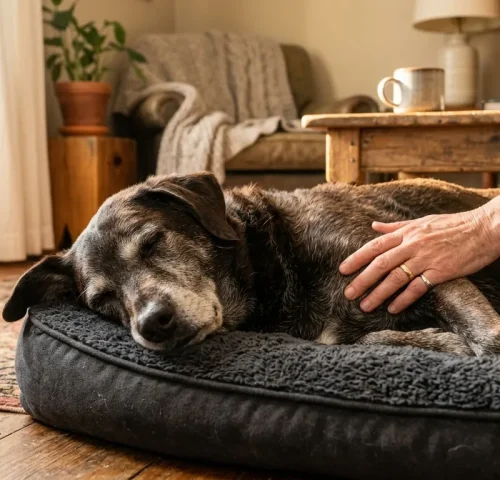

No one prepares you for the moment your veterinarian says there is nothing more they can do to cure your dog. One day you are managing a diagnosis, searching for answers, hoping for good news — and then, suddenly, the conversation shifts. The goal is no longer to fight the illness. The goal becomes something quieter, and in many ways, more profound: making every remaining day as comfortable, dignified, and full of love as possible.
That is what dog hospice care is. And while it is one of the hardest journeys a pet parent will ever walk, it is also one of the most meaningful acts of love you can offer your dog.
This guide is here to walk you through what hospice care involves, how to recognize when it may be time, what to expect at home, and how to take care of yourself through it all.
What Is Dog Hospice Care?
Dog hospice care — sometimes called end-of-life care or palliative care — is the support given to a dog in the final days, weeks, or months of their life when a cure is no longer possible or being pursued. It is important to understand that hospice care does not include therapies directed at a cure. Its purpose is to provide comfort during the end stage of a dog’s life, and to support a peaceful passing — whether that ultimately means euthanasia or a natural death.
Hospice is not a place. It is a philosophy — a commitment to prioritizing quality of life over quantity of days. It is the shift from asking “What can we do to make them live longer?” to “What can we do to make every day they have left a good one?”
Palliative Care vs. Hospice Care
These two terms are often used interchangeably, but there is a meaningful distinction. Palliative care can begin at any stage of a serious illness and may run alongside treatments aimed at managing or slowing the disease. Hospice care, on the other hand, begins when curative treatment is no longer the goal — when care becomes focused entirely on comfort.
Think of palliative care as a companion to treatment, and hospice as the final chapter — one you write with intention and love.
Common Conditions That Lead to Hospice
Some of the most common conditions that lead pet owners to seek hospice care for their dogs include cancer (the leading cause of death in senior dogs), incurable organ disease such as kidney or liver failure, and severe osteoarthritis that cannot be managed with medication. Advanced age with a steadily declining quality of life is also a valid and common reason, even without a specific terminal diagnosis.
If your dog has recently received a serious diagnosis or is entering their senior years, our Complete Guide to Golden Years Wellness offers a helpful foundation for understanding what changes to expect and how to support your aging pup through each stage.
Signs It May Be Time to Consider Hospice
One of the most common questions veterinarians and hospice teams hear is: “How do I know when it is time?” It is a question that carries enormous weight, and there is no single answer that fits every dog or every family. But there are signs to watch for.
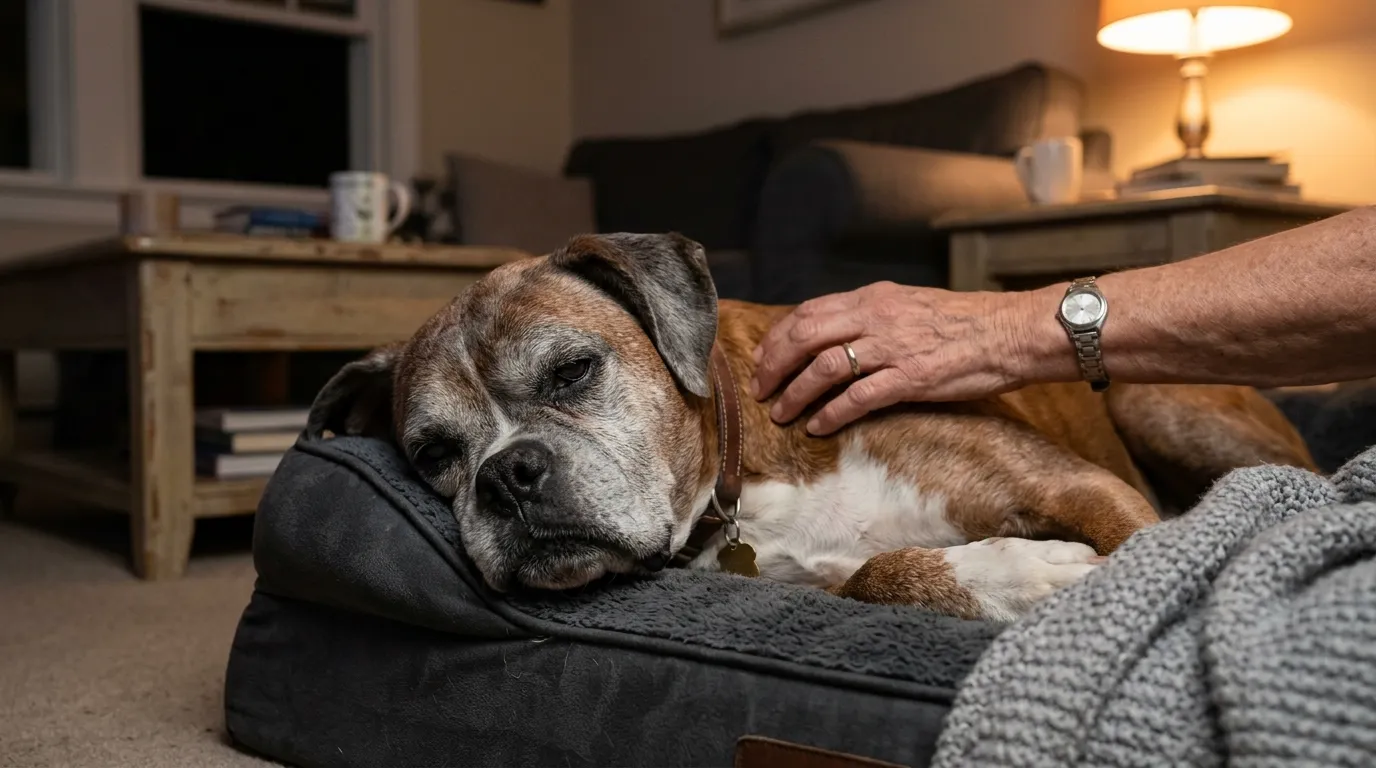
Physical Signs to Watch For
When dogs are suffering, they may not show the outward signs we associate with pain — like whimpering or crying. Sometimes a dog will continue to eat or drink despite being in significant discomfort. Physiological and behavioral signs that your dog may be experiencing pain include excessive panting, reclusiveness, reluctance to move, and loss of interest in food.
Other indicators that quality of life is declining include:
- More bad days than good days over the course of a week
- Difficulty standing, walking, or finding a comfortable position to rest
- Loss of bladder or bowel control
- Significant, unexplained weight loss
- Complete loss of interest in food, water, or interactions they once enjoyed
- Labored breathing or persistent coughing
Using a Quality-of-Life Scale
A quality-of-life assessment can help take some of the emotion out of an incredibly emotional decision. Veterinary oncologist Dr. Alice Villalobos developed a widely used quality-of-life scale that gives pet owners a somewhat objective method for evaluating their dog’s day-to-day experience and guiding discussions with their veterinary team.
One practical approach is keeping a daily journal — noting whether each day was a good one, a neutral one, or a difficult one. After two to three weeks, the pattern will speak clearly. Bring that journal to every hospice appointment, as veterinarians rely heavily on your at-home observations to adjust care plans.
What Dog Hospice Care Looks Like at Home
Most dog hospice care takes place at home, with the pet parent serving as the primary caregiver and the veterinary team providing guidance, medication, and regular reassessment. Simple modifications to your home can make a real difference in your dog’s comfort — such as improving traction on slippery floors, ensuring their bed is cushioned and accessible, and optimizing where their food and water are positioned.
Pain and Symptom Management
Pain management is at the heart of hospice care. Many dogs in their final stage of life are dealing with pain that is not always visible to the naked eye. Medications available to relieve pain and decrease anxiety include various categories of anti-inflammatory drugs, topical anesthetics, pain relievers, sedatives or tranquilizers, and anti-nausea medications — all tailored to your dog’s specific needs and condition.
Always work closely with a veterinarian who supports at-home hospice to find the right balance. Unmanaged pain significantly reduces quality of life and should never be dismissed as “just old age.”
Nutrition and Hydration
Nutrition for dogs in hospice focuses on making food tasty, easy to eat, and calorie-sufficient — rather than adhering to a strict therapeutic diet. If your dog turns down their regular food, talk with your veterinarian about switching to something they will actually eat, or adding dog food toppers to rekindle interest in meals.
There often comes a point when dogs completely stop eating and drinking. This is a natural part of the late end-stage of life, not a problem to be solved. Your veterinary team will guide you through what this means and what to expect.
Comfort and Home Environment
Creating a sanctuary for your dog at home is one of the most tangible things you can do. Consider the following:
- Orthopedic or memory foam bedding placed in their favorite spot, away from drafts and household noise
- Non-slip mats or rugs on hard floors to prevent slipping and the anxiety it causes
- Low-sided food and water bowls that are easy to reach without straining
- Ramps or steps to help them access their favorite resting spots without jumping
- Gentle grooming using a soft brush — a soothing, bonding act that does not require them to move or perform
Maintaining a safe, protected home environment becomes especially critical during this stage, when your dog’s mobility and awareness may be reduced.
Working With Your Veterinary Team
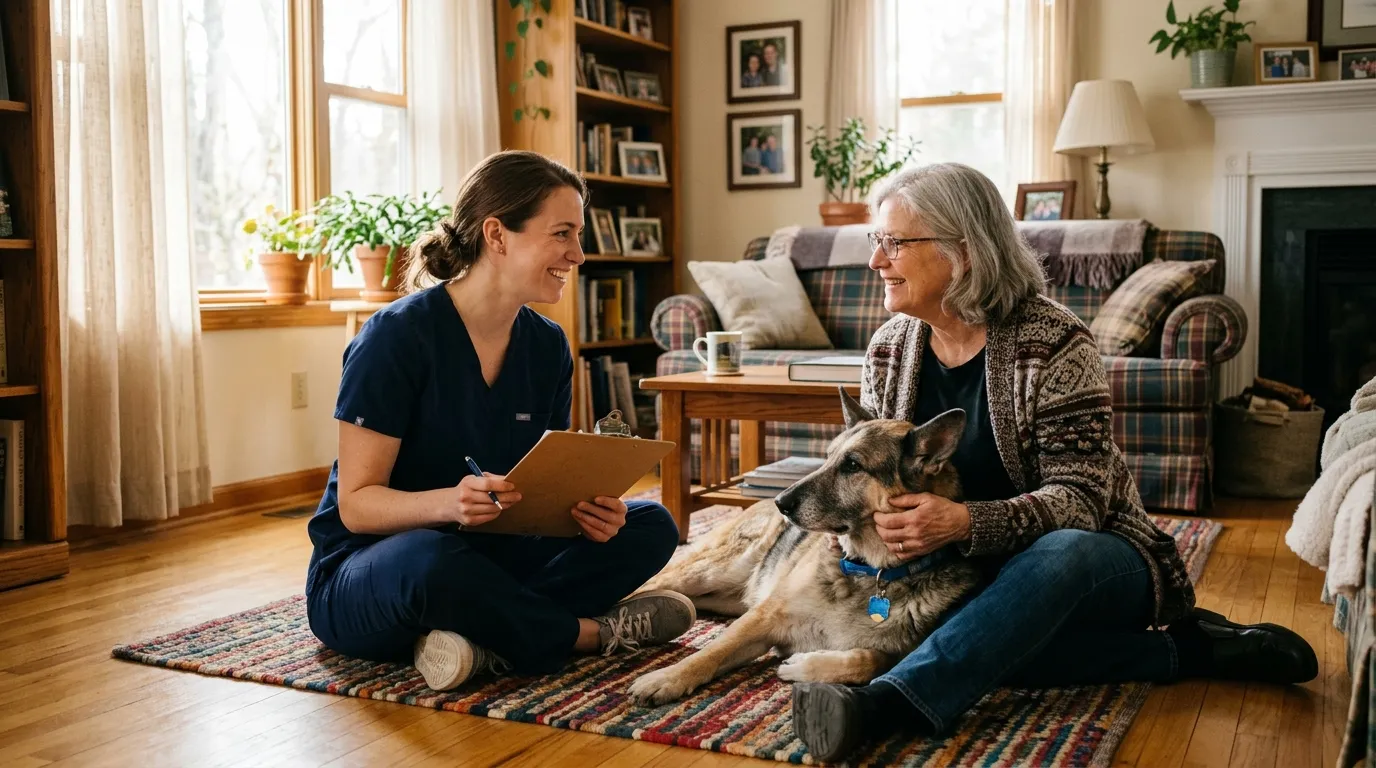
Dog hospice care is not something you navigate alone. Your veterinary team — and in some cases, a specialist in animal hospice and palliative care — is your partner throughout this process.
Finding the Right Support
Not every general practitioner is trained in end-of-life care. You may need a certified hospice veterinarian who holds credentials such as the Certified Hospice and Palliative Care Veterinarian designation from the International Association for Animal Hospice and Palliative Care (IAAHPC). In-home hospice visits are available through networks like Lap of Love in the United States, which connects families with veterinarians who specialize in end-of-life care.
Understanding the Costs
A hospice consultation typically runs between $300 and $650. Monthly ongoing care can add $200 or more, and in-home euthanasia is billed separately at $350 to $900 depending on location and the size of the dog. Virtual consultations are increasingly available and can be especially valuable for families in rural areas or those who are managing time constraints.
If cost is a concern, this is another area where having pet insurance in place ahead of time can provide meaningful support. Our guide on pet insurance for dogs explains how coverage can help offset end-of-life veterinary expenses.
The Question of Euthanasia
Euthanasia is a deeply personal decision, and one that carries tremendous love within it. Euthanasia provides a painless, peaceful end for a pet who would otherwise continue to suffer. During the procedure, a veterinarian administers a sedative followed by a second medication. The animal experiences no awareness — the process is similar to undergoing general anesthesia and takes about 10 to 20 seconds.
Veterinary professionals consistently report that the overwhelming majority of families wait longer than is necessary — not the other way around. Your veterinarian is the most trusted voice in helping you determine when that moment has arrived, and they will support you through it completely.
Taking Care of Yourself Through the Process
Caring for a dog in hospice is one of the most emotionally demanding experiences a person can go through. The grief you feel before your dog is gone — what is known as anticipatory grief — is real, valid, and recognized by grief professionals as psychologically comparable to other significant losses.
Peer-reviewed research confirms that the grief response triggered by pet loss activates the same regions of the brain as losing a human family member. This is not sentimentality — it is biology. And addressing your own grief during the hospice period actually improves the quality of care and decision-making you provide for your dog.
Where to Find Support
- Ask your hospice veterinary team for referrals to pet loss support groups — many are available online
- Reach out to friends, family, or a counselor who understands the depth of the human-animal bond
- Give yourself permission to grieve fully — before, during, and after
You are not “just losing a pet.” You are losing a member of your family. That loss deserves to be honored.

Honoring the Bond Until the Very End
The days you spend caring for your dog through hospice will stay with you forever. The gentleness of it. The way they still look for you when you walk in the room. The small moments — a tail wag, a sigh, a nose resting on your hand — that carry the entire weight of your years together.
Hospice is not giving up. It is the deepest form of advocacy your dog will ever receive. It says: I am here. I will not let you suffer. I will love you until the very last breath.
Work closely with your veterinary team, lean on your support network, and trust yourself. You know your dog better than anyone. That knowledge — combined with compassionate guidance — is everything they need for a dignified, peaceful goodbye.
For more on supporting your aging dog throughout their senior years, visit our Senior Dogs category here on The Dog Blog.