



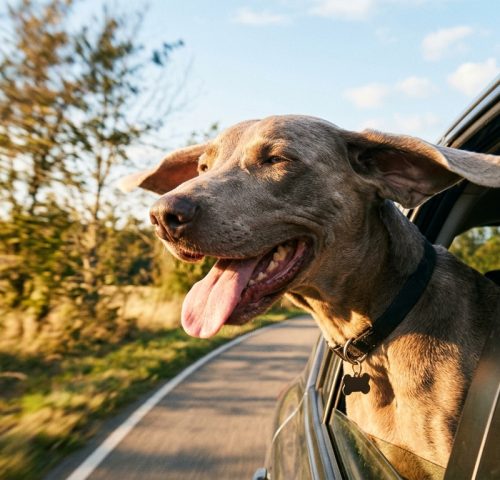

There is something genuinely magical about a road trip with your dog. The two of you, an open road, a carefully packed bag of essentials, and absolutely no idea whose enthusiasm is bigger — yours or theirs. Dogs are built for adventure, and for the most part, they make extraordinary travel companions.
But a great road trip with your dog does not happen by accident. It takes planning, the right gear, a few smart habits, and a willingness to let the trip run at a slightly different pace than you might otherwise choose. Get those things right, and a road trip with your pup becomes one of the most rewarding experiences you can share.
This guide covers everything — from car safety and packing lists to finding dog-friendly accommodation and keeping your dog calm and comfortable for the entire journey.
Before You Leave: Preparation Makes the Difference
The best road trips start well before the engine does. A little preparation at home sets the tone for everything that follows.
Visit Your Vet First
Before any significant road trip, a vet check is a smart first step — especially for puppies, senior dogs, and dogs with existing health conditions. According to Wayfaring Architect, thinking through your dog’s specific needs before you even begin packing makes every aspect of the journey smoother. This is also the right time to discuss motion sickness — a surprisingly common issue in dogs — and whether a short-term anti-nausea medication might make the journey more comfortable for your pup. Ask for a copy of your dog’s vaccination records and any relevant health documentation to bring with you.
Make Sure Your Dog Is Microchipped and Tagged
Travelling means new environments, unfamiliar smells, and a higher-than-usual risk of your dog slipping their leash or bolting from an open car door. Before you go, confirm your dog’s microchip is registered and your contact details are up to date. Add a travel tag to their collar with your mobile number — one that will actually be answered if someone finds your dog far from home. A GPS tracking collar is worth considering for dogs who are prone to wandering. For more everyday protection habits, our post on essential tips to keep your pup protected covers safety practices every dog owner should have in place.
Practice Short Trips First
If your dog rarely travels by car, a long road trip is not the place to find out how they handle it. Build up gradually with short drives in the days or weeks before — around the block, to the park, somewhere with a positive payoff. This conditions them to associate car travel with good things rather than anxiety, and gives you early warning of any motion sickness or stress responses to address before the big trip.
Car Safety: How to Keep Your Dog Secure
This is the section that matters most for your dog’s wellbeing — and the one most commonly skipped. An unrestrained dog in a moving vehicle is a safety risk to everyone in the car, including themselves.
Crash-Tested Harnesses
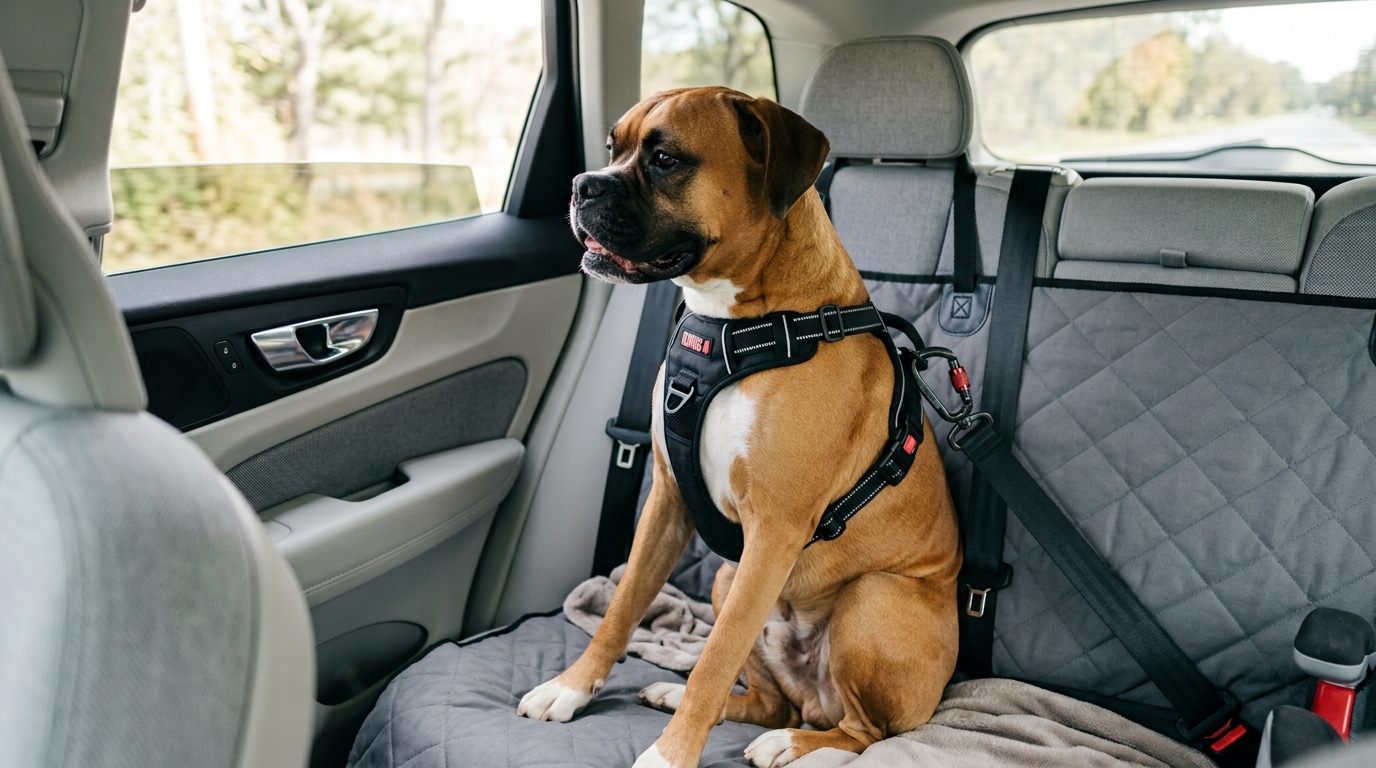
A standard harness attached to a seat belt is the most practical restraint option for most dogs. According to Chewy, dogs should always be restrained using a crash-tested seat belt harness, booster seat, or crate — not all pet harnesses meet genuine crash-safety standards, so look for independent crash-test certification when choosing one.
Crates and Barriers
For larger dogs or those who travel better in an enclosed space, a secured travel crate in the boot or cargo area is an excellent option. The crate should be secured so it cannot shift during braking or cornering. A metal barrier between the passenger cabin and the boot is another option, though it offers less protection in a crash than a properly secured crate.
Never Leave Your Dog in a Parked Car
This cannot be overstated. The AKC warns that on a warm day, the inside of a car can reach dangerous temperatures within minutes — even with the windows cracked. Heatstroke in dogs can be fatal and develops rapidly. Plan your rest stops at locations where your dog can come with you, and never leave them unattended in a vehicle in warm weather.
Keep Your Dog Out of the Front Seat
A dog in the front passenger seat is a distraction risk for the driver and a danger to themselves if the airbag deploys. The back seat — properly restrained — is always the right place for your dog in the car.
What to Pack: The Complete Dog Road Trip Checklist
Packing for a dog is its own art form. The goal is to bring everything they genuinely need without turning the car into a kennel supply warehouse. Here is what belongs in every dog’s travel bag.
Food, Water, and Feeding Equipment
- Enough of their regular food for the entire trip plus a day’s emergency buffer — switching food while travelling risks digestive upset at the worst possible time
- A spill-proof travel water bowl and a sufficient supply of fresh water from home, particularly if your dog has a sensitive stomach
- Treats — travel-sized training treats are perfect for rewarding calm behaviour at rest stops and in new environments
- Collapsible food and water bowls for easy use at stops along the way
Health and Safety Essentials
- Vaccination records and health documentation — some pet-friendly hotels require proof of vaccination before check-in
- Any regular medications your dog takes, plus any travel-specific medication prescribed by your vet
- A basic pet first aid kit including gauze, antiseptic wipes, tweezers, and a digital thermometer
- Your vet’s contact number and the number of an emergency animal hospital at your destination
- Pet insurance details — if you have coverage, keep your policy information accessible. Our guide on pet insurance for dogs explains what to look for in a travel-inclusive policy
Comfort and Familiarity Items
- Their own bed or a familiar blanket — the scent of home is genuinely calming in unfamiliar places
- A favourite toy or chew to keep them settled during long stretches in the car
- Poop bags — more than you think you will need
- A towel for muddy paws, unexpected swims, or rainy rest stops
- A spare leash and collar — losing the only leash two hours from home is a genuinely avoidable problem
According to AAA, a reliable rule of thumb on any road trip with a dog is this: if you need to stop for a bathroom break, so does your dog. Plan accordingly and never expect them to hold it for long stretches of highway driving.
Planning Your Route and Rest Stops
One of the biggest differences between travelling with and without a dog is how often you stop — and what those stops look like.
How Often to Stop
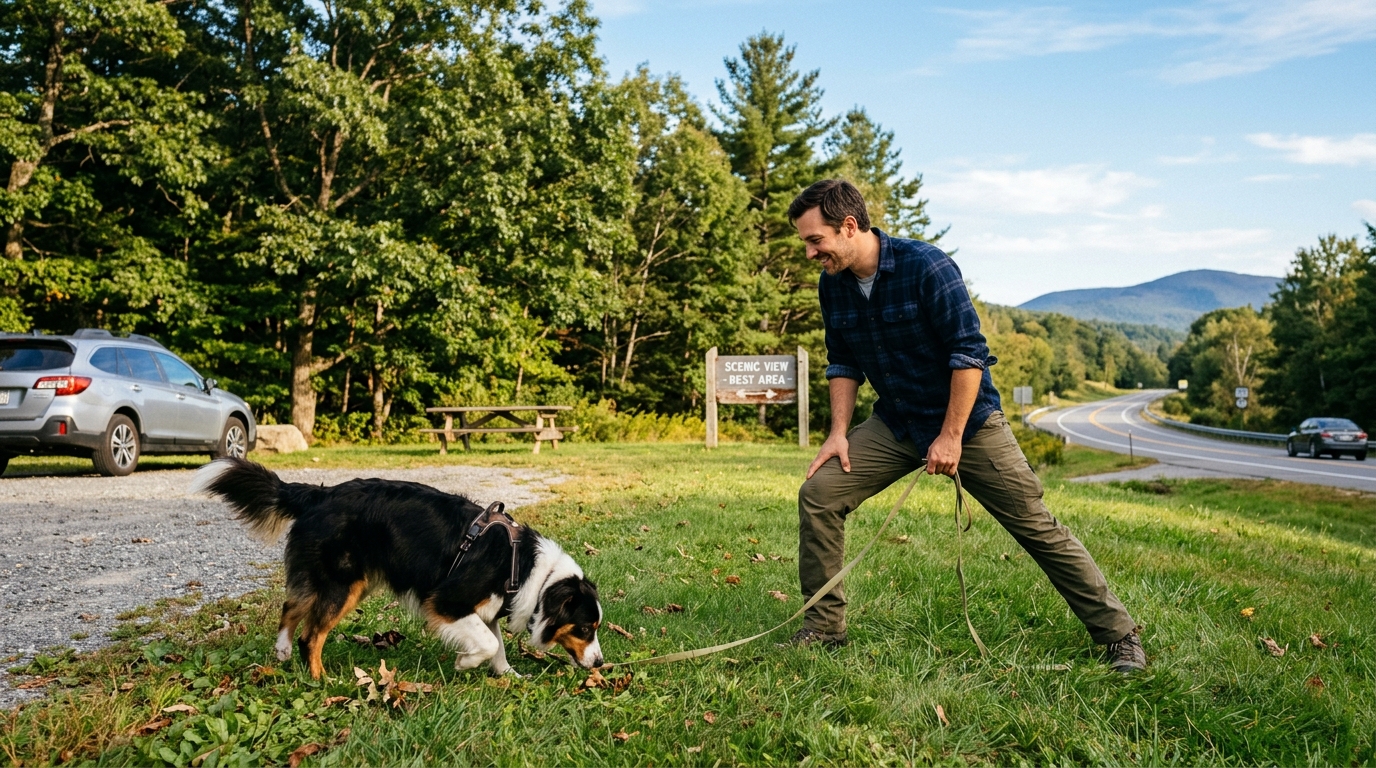
According to The Vet Desk, frequent breaks are essential on road trips with dogs — ideally every two to three hours — for toileting, fresh water, and a chance to move and properly decompress. Plan your route with this in mind, identifying suitable rest stops, parks, or open spaces at roughly two-hour intervals.
Finding Dog-Friendly Stops Along the Way
Apps like BringFido are invaluable for identifying dog-friendly parks, restaurants with outdoor seating, beaches, and attractions along your route. Searching ahead of time means you are not pulling over on a hard shoulder with a desperate dog and no plan. Sniff walks at rest stops — letting your dog lead and explore at their own pace on a longer lead — are one of the best ways to truly decompress a dog mid-journey. Our post on sniff walks and decompression walks explains exactly why this style of walk is so effective at resetting a dog’s nervous system.
Finding Dog-Friendly Accommodation
Not all pet-friendly hotels are created equal, and the fine print matters considerably more than the pet-friendly label.
What to Check Before Booking
According to Dogster, every hotel has its own individual pet policy — and policies vary significantly even within the same hotel chain. Before booking, confirm the pet fee structure (per night or flat fee), weight limits, breed restrictions, how many dogs are permitted per room, whether dogs can be left unattended in the room, and whether there is outdoor green space nearby for toileting.
Useful Tools for Finding Pet-Friendly Stays
Beyond filtering major booking platforms by “pet-friendly,” several dedicated tools exist specifically for travelling dog owners. BringFido lists over 500,000 pet-friendly places to stay, eat, and explore. PetsWelcome offers a route-based road trip planner that maps pet-friendly hotels along your specific journey — extremely useful for multi-day trips where you need multiple overnight stops.
Make Your Dog Feel at Home
A hotel room is an unfamiliar environment full of new smells — which can make some dogs anxious or restless, particularly at night. Bring their bed or blanket, set up their usual sleeping area as close to normal as possible, and keep their routine consistent. Feed them at the same time you normally would, and give them a proper walk before settling in for the evening. The more predictable the routine, the more settled your dog will be in a new space.
Keeping Your Dog Calm and Comfortable on the Road
Managing Anxiety and Motion Sickness
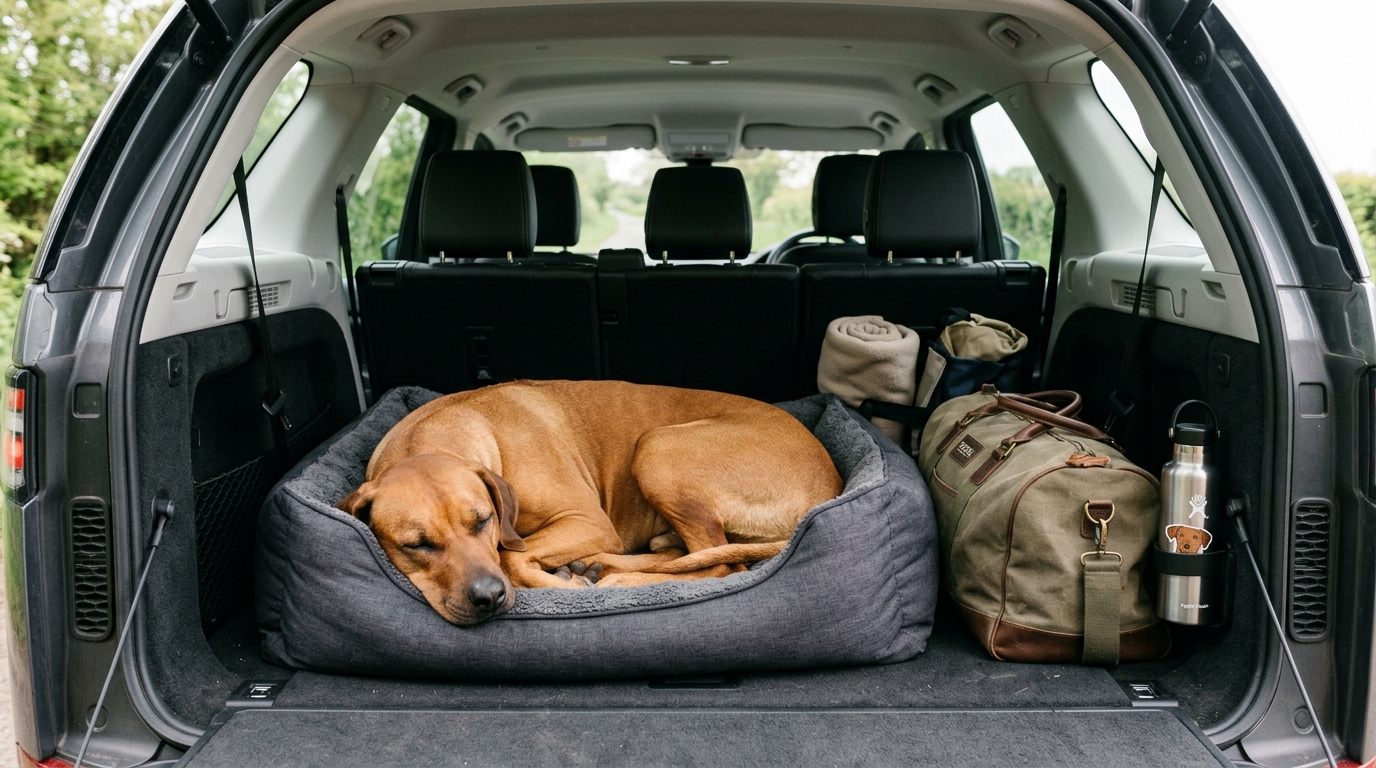
Some dogs are natural travellers — they fall asleep within minutes of the car moving and wake up refreshed at the destination. Others struggle with anxiety or motion sickness that builds over longer journeys. Signs of car anxiety include excessive panting, drooling, whining, or repeated attempts to change position. Signs of motion sickness include lip licking, excessive yawning, and vomiting. Both are manageable with veterinary guidance — speak to your vet before the trip if your dog shows any of these signs on shorter drives.
Keep the Car Cool and Well-Ventilated
Ensure your dog has adequate airflow throughout the journey. Keep the air conditioning running in warm weather, and offer water at every rest stop — dogs can become dehydrated more quickly in a warm car than owners realise. Avoid feeding a large meal immediately before a long drive, as this increases the risk of motion sickness. A light meal two to three hours before departure is the better approach.
Enrichment During the Journey
Long stretches in the car can be boring for an active dog. A frozen Kong stuffed with their favourite filling, a long-lasting natural chew, or a puzzle feeder can provide meaningful enrichment during quieter stretches of the journey. For more ideas on keeping your dog mentally engaged wherever you are, our guide on brain games and interactive toys has plenty of inspiration that works just as well on the road as it does at home.
Final Thoughts
A road trip with your dog is one of those experiences that changes the way you see travel. You stop more often, notice more, slow down in places you would have otherwise driven straight through. Your dog’s curiosity about the world is contagious — and sharing that curiosity from the passenger window, at a new trailhead, or on an unfamiliar stretch of beach is genuinely hard to beat.
Prepare well, pack smart, drive safely, and give yourself permission to follow your dog’s lead a little more than you normally might. The detours are usually the best part. For more ideas on fun activities and adventures to share with your dog, explore our Care Tips and Health & Wellness categories here on The Dog Blog.