



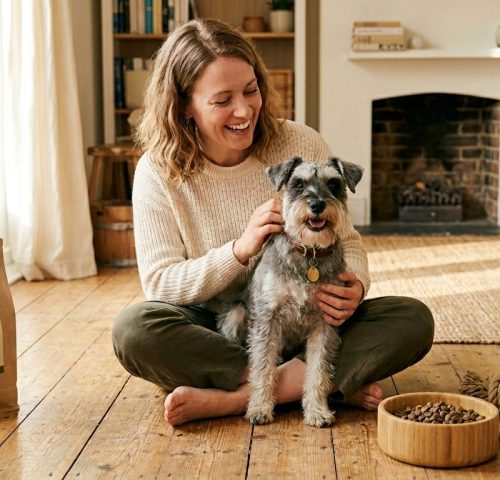

Loving your dog and caring about the planet are not two separate things — they have always gone hand in hand. But for a long time, the pet industry made sustainable choices surprisingly hard to find. That is changing fast.
In 2026, eco-friendly dog ownership is no longer a niche concern reserved for hardcore environmentalists. It is a growing mainstream movement driven by pet parents who want the products they buy, the food they feed, and the waste they generate to reflect the same values they hold everywhere else in their lives.
The good news: you do not need to overhaul everything at once. Small, intentional swaps — made one category at a time — add up to a meaningful difference for your dog and for the planet. Here is where to start.
Why Sustainable Dog Ownership Matters
Before diving into product swaps, it helps to understand the scale of the issue. Dogs are beloved members of our families — but their care has a measurable environmental footprint, and most of it comes from one source: what we feed them.
According to research from the University of Edinburgh, scientists calculated the carbon footprint of nearly 1,000 commercially available dog foods and found that the highest-impact options produce up to 65 times more greenhouse gas emissions than the lowest-impact ones. Producing enough of the highest-impact food types to feed dogs globally could generate emissions equivalent to over half of all commercial aviation fuel burned in a year.
Beyond food, according to Earth.org, an average-sized dog generates approximately 770 kg of CO2 equivalent annually — and a large dog can exceed 2,500 kg per year, which surpasses the emissions of an average family car. That number is largely driven by diet, but it is also shaped by the toys we buy, the grooming products we use, and the waste bags we reach for on every walk.
None of this is a reason to feel guilty about having a dog. It is a reason to make thoughtful choices — which, as it turns out, are increasingly easy and affordable to make.
Sustainable Dog Food: The Biggest Impact You Can Make
Because food accounts for the vast majority of a dog’s environmental footprint, what you put in their bowl is the single most impactful sustainability decision you will make as a pet owner.
Choose Kibble Over Wet Food Where Possible
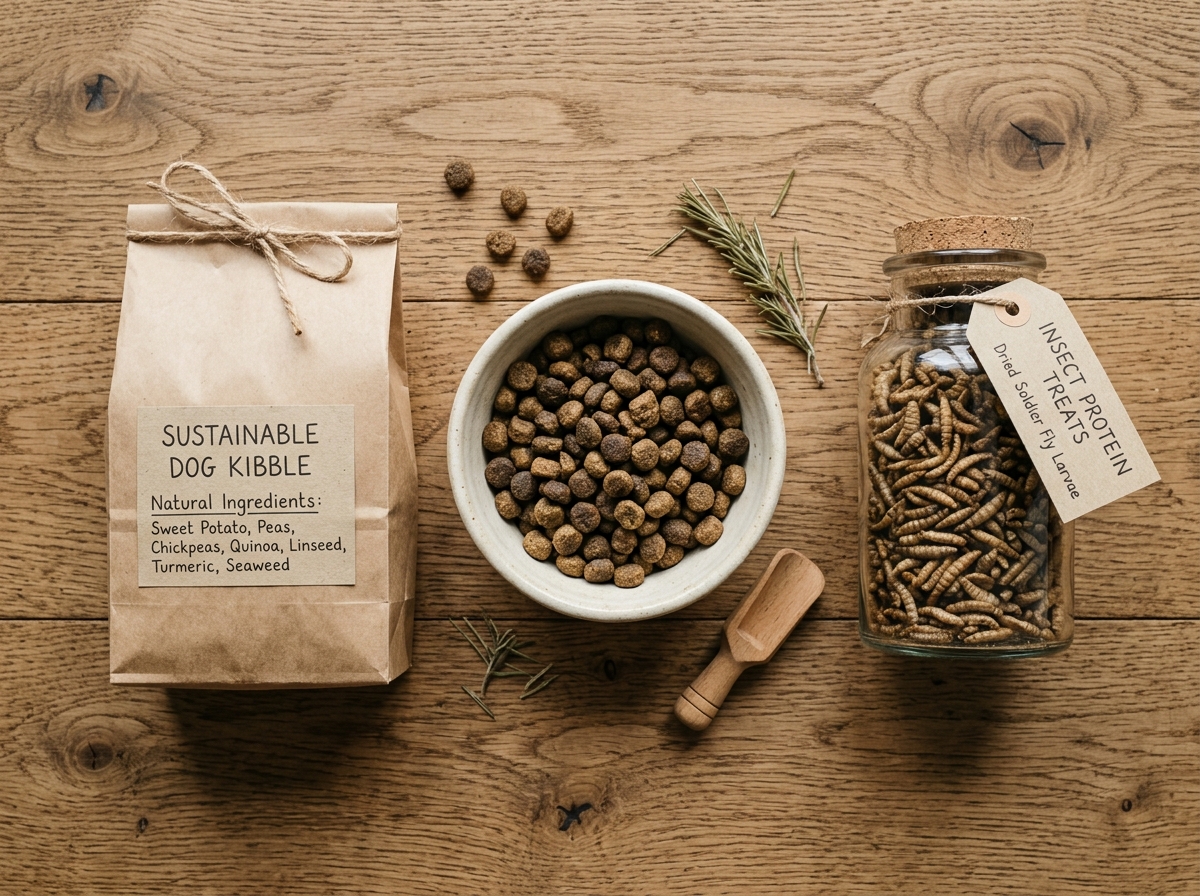
The format of your dog’s food matters enormously. Research from Faunalytics shows that wet food generates almost eight times more CO2-equivalent emissions than dry kibble — and large dogs have an ecological footprint nine times greater than small dogs. If your dog currently eats wet food as a primary diet and their health allows for a transition, switching to a high-quality dry kibble with lower-impact protein sources is one of the most effective environmental steps you can take.
Look for Lower-Impact Protein Sources
Not all proteins are created equal when it comes to emissions. Research published by Fast Company notes that foods containing prime cuts — the same cuts humans eat — carry a significantly larger carbon footprint than those using meat by-products or plant-based ingredients. Chicken generally has a lower footprint than beef, and foods that include by-products rather than prime muscle meat can be both nutritionally sound and more sustainable.
Consider Insect-Based and Plant-Based Options
Insect protein is one of the fastest-growing categories in sustainable pet food — and for good reason. According to iHeartDogs, insect protein has a significantly lower carbon footprint and water usage than traditional protein sources, and is highly digestible — making it a solid option for dogs with sensitive stomachs. Brands like Yora and Jiminy’s have made insect-based dog food increasingly accessible. Plant-based options are also available for dogs under veterinary supervision.
If you are thinking about adjusting your dog’s diet, our Dog Nutrition category has a range of guides on balanced feeding, ingredient labels, and what to look for in a quality dog food — a helpful starting point before making any changes.
Avoid Overfeeding
One of the simplest sustainability changes costs nothing at all. As Pet Innovation Awards notes, conscious consumption is at the heart of sustainable pet ownership — and that starts with feeding your dog the right amount. Overfeeding is widespread among pet owners and adds meaninglessly to both your dog’s environmental footprint and their risk of obesity-related health problems. Feeding to your dog’s ideal body weight — not to the generous end of the package guidelines — is both better for their health and better for the planet. Talk to your vet about the right portion size for your specific dog’s age, breed, and activity level.
Green Toys and Enrichment Products
The toy aisle is one of the most wasteful corners of the pet industry. Cheap plastic toys are often chewed apart within days, end up in landfills, and may contain synthetic dyes or materials that are not entirely safe for dogs to mouth repeatedly. Sustainable alternatives exist across every toy category.
Natural Material Toys
According to KOSTON, toys made from organic cotton, hemp, or natural rubber are safer, free from toxic chemicals, and often surprisingly durable. The natural textures help clean teeth and massage gums, while chewing provides stress relief and mental stimulation.
Buy Durable, Not Disposable
The most sustainable toy is the one that lasts. Rather than buying several inexpensive toys that need replacing frequently, investing in one or two high-quality, durable products reduces long-term waste and cost significantly. Look for toys that are repairable or refillable — such as stuffable rubber toys that can be cleaned and reused indefinitely.
Mental enrichment toys in particular tend to be durable by design. Interactive puzzle toys and snuffle mats made from natural fibres last far longer than squeaky stuffed animals. For ideas on how to use enrichment toys as part of a broader mental stimulation routine, take a look at our post on brain games and interactive toys for dogs.
Eco-Friendly Grooming and Care Products
Conventional grooming products often contain synthetic fragrances, sulphates, parabens, and other chemicals that wash off into waterways with every bath. The packaging — almost always single-use plastic — adds to the problem. Greener alternatives cover the full range of grooming needs.
Natural Shampoos and Conditioners
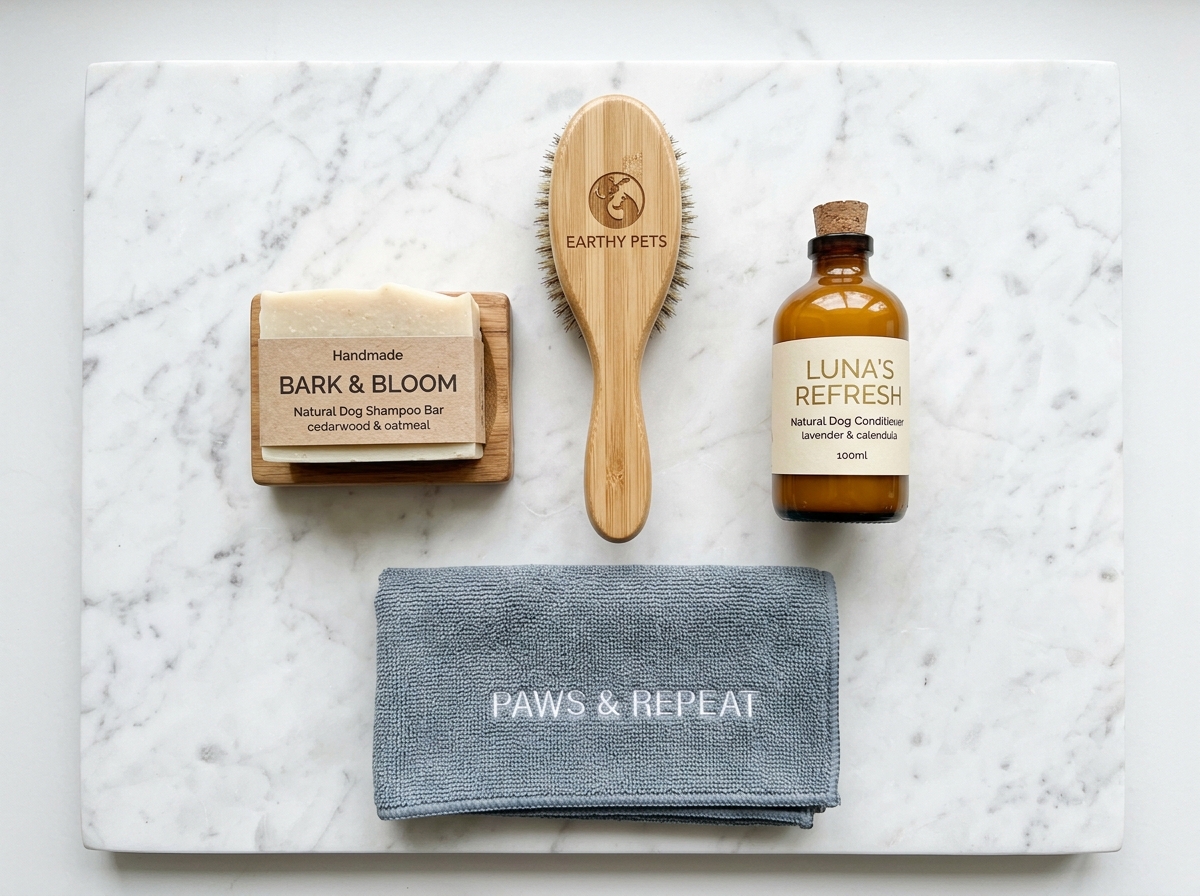
Look for dog shampoos made with plant-derived ingredients, free from synthetic fragrances and preservatives. Several brands now offer shampoo bars — solid, concentrated formulas with zero plastic packaging that last significantly longer than liquid bottles. Ingredients like oat extract, aloe vera, and coconut oil are gentle on sensitive skin and biodegradable. Always choose products formulated specifically for dogs, as human products — even natural ones — can disrupt a dog’s skin pH.
Bamboo and Recycled Grooming Tools
Grooming tools like brushes, combs, and nail files are available with bamboo or recycled material handles. As highlighted by Sustainable Jungle, bamboo is one of the most sustainable materials available — it grows rapidly without pesticides, requires minimal water, and is fully biodegradable at the end of its life. Bamboo-handled brushes are widely available and perform just as well as plastic alternatives, often at a comparable price point.
Reusable Wipes and Towels
Pre-moistened dog wipes are a staple in many households for quick clean-ups after walks. Most are single-use and non-recyclable. Switching to washable microfibre cloths or reusable cotton rounds reduces ongoing waste significantly. For muddy paws after rainy walks, a dedicated washable dog towel replaces dozens of disposable alternatives over the course of a year.
Keeping your dog clean and protected from environmental hazards is an important part of everyday care. Our post on essential tips to keep your pup protected covers practical safety and hygiene habits that pair well with a greener grooming routine.
Sustainable Waste Management
Dog waste is unavoidable — but the bags used to manage it do not have to last for centuries in a landfill. Conventional plastic poop bags can take up to 1,000 years to decompose. Compostable and biodegradable alternatives are now widely available, affordable, and just as functional.
Compostable Poop Bags
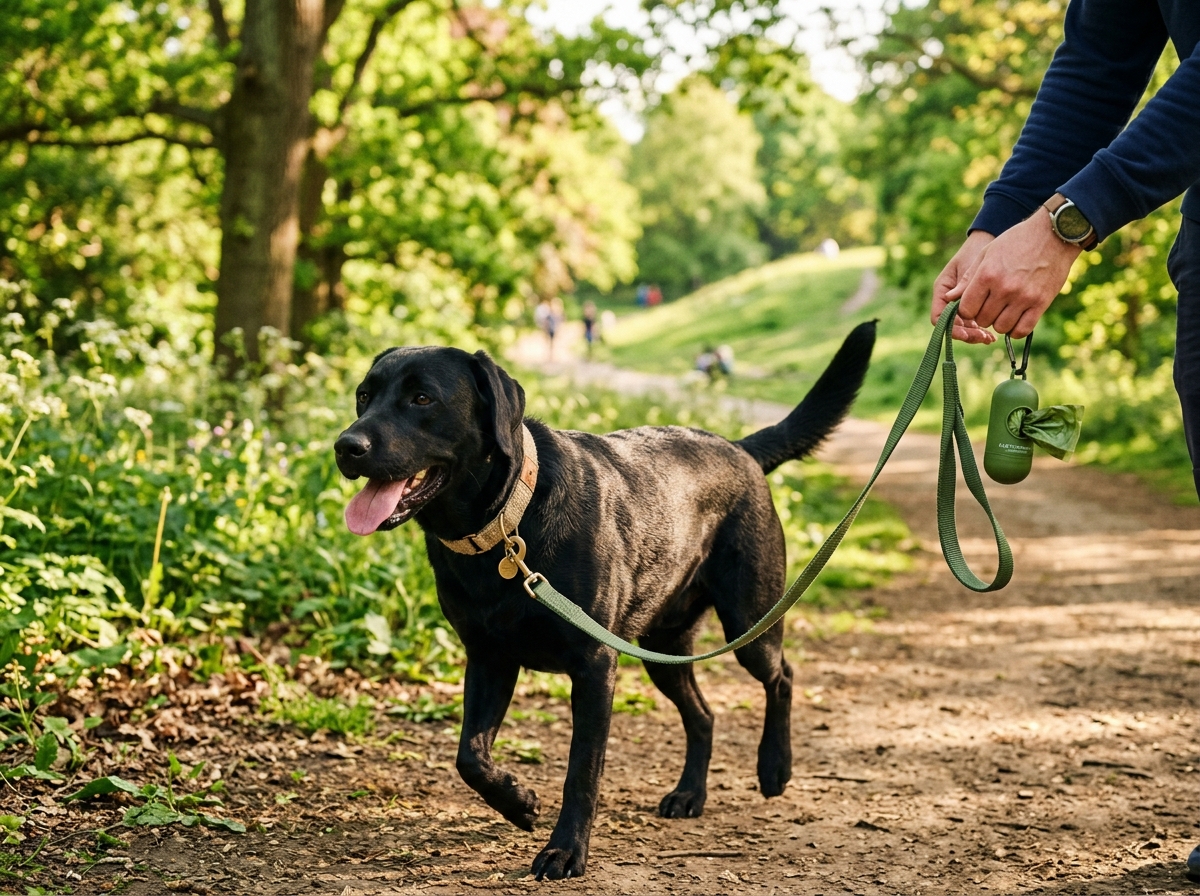
According to The Good Trade, certified compostable poop bags — such as those from Beyond Green — are 100% natural, chemical-free, and designed to break down naturally over time without sacrificing sturdiness. Look for bags certified to ASTM D6400 or EN 13432 standards, which confirm genuine compostability rather than just marketing language.
One important note: compostable bags require a composting environment to break down properly. Simply placing them in a standard landfill bin significantly slows the process. Some cities offer pet waste composting programmes — check whether your local council provides this option.
Sustainable Collars, Leashes, and Accessories
According to a PetSmart 2026 sustainability report, the retailer expanded its range of purpose-driven, sustainably sourced brands to meet growing customer demand — making eco-conscious pet products increasingly accessible at competitive prices. Hemp and recycled nylon leashes and collars are durable, stylish, and widely available. Hemp in particular is naturally antimicrobial, resistant to mould, and softens with use — making it an excellent long-term material for everyday wear.
Small Swaps, Meaningful Change
Sustainable dog ownership does not require perfection or a complete overhaul of everything you already own. The most effective approach is gradual and intentional — replacing items as they run out rather than discarding everything at once, which would itself create unnecessary waste.
A practical starting checklist:
- Next time you buy poop bags, switch to a certified compostable brand
- When your current shampoo runs out, replace it with a natural or shampoo-bar alternative
- Review your dog’s food — check whether the primary protein source is one of the lower-impact options
- When replacing a toy, choose one made from natural rubber, hemp, or organic cotton
- Check portion sizes with your vet to ensure you are feeding to ideal body weight
Each of these changes is small on its own. Combined across millions of dog households, they represent a genuinely significant shift in the pet industry’s environmental impact — and each one is a concrete expression of the same care you already show your dog every single day.
For more practical guidance on keeping your dog healthy and happy across all areas of their life, explore our Care Tips and Health & Wellness categories here on The Dog Blog.
Final Thoughts
Your dog brings so much to your life — companionship, joy, purpose, and an excuse to go outside every single day. Giving back to the world they share with you is one of the most fitting ways to honour that bond.
Eco-friendly dog ownership is not about guilt or deprivation. It is about making thoughtful choices that are good for your dog, good for your household, and good for the planet — ideally all three at once. And as the market for sustainable pet products continues to grow, those choices are getting easier, better, and more affordable with every passing year.
Start small. Stay consistent. And know that every green swap you make matters — for your dog and for the world they love to explore.