




Halloween can be exciting for people and overwhelming for dogs. Doorbells ring, strangers arrive in costumes, and candy is left within nose range.
The best Halloween dog safety plan puts your dog’s comfort before the photo opportunity. Some dogs enjoy the activity. Many would rather rest in a quiet room with a familiar chew and no contact with visitors. There is no prize for bringing a worried dog into a busy situation. The goal is a calm night with fewer hazards, not a perfectly staged celebration.
Decide Whether a Costume Is Right for Your Dog
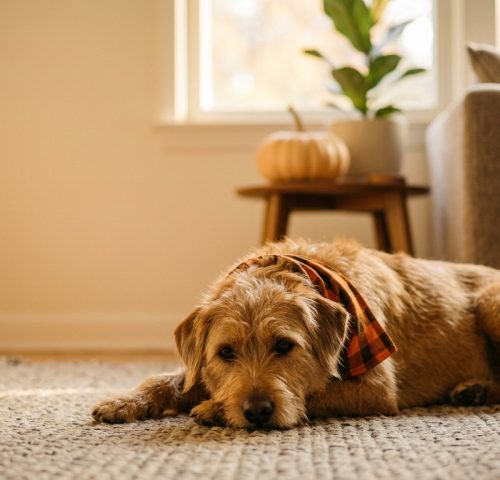
Start with the simplest question: does your dog seem comfortable wearing clothing or accessories? A loose festive bandana may be enough for a dog who dislikes outfits. A costume is optional, and a dog should never have to wear one just because the rest of the family is dressed up.
Look for early signs of discomfort
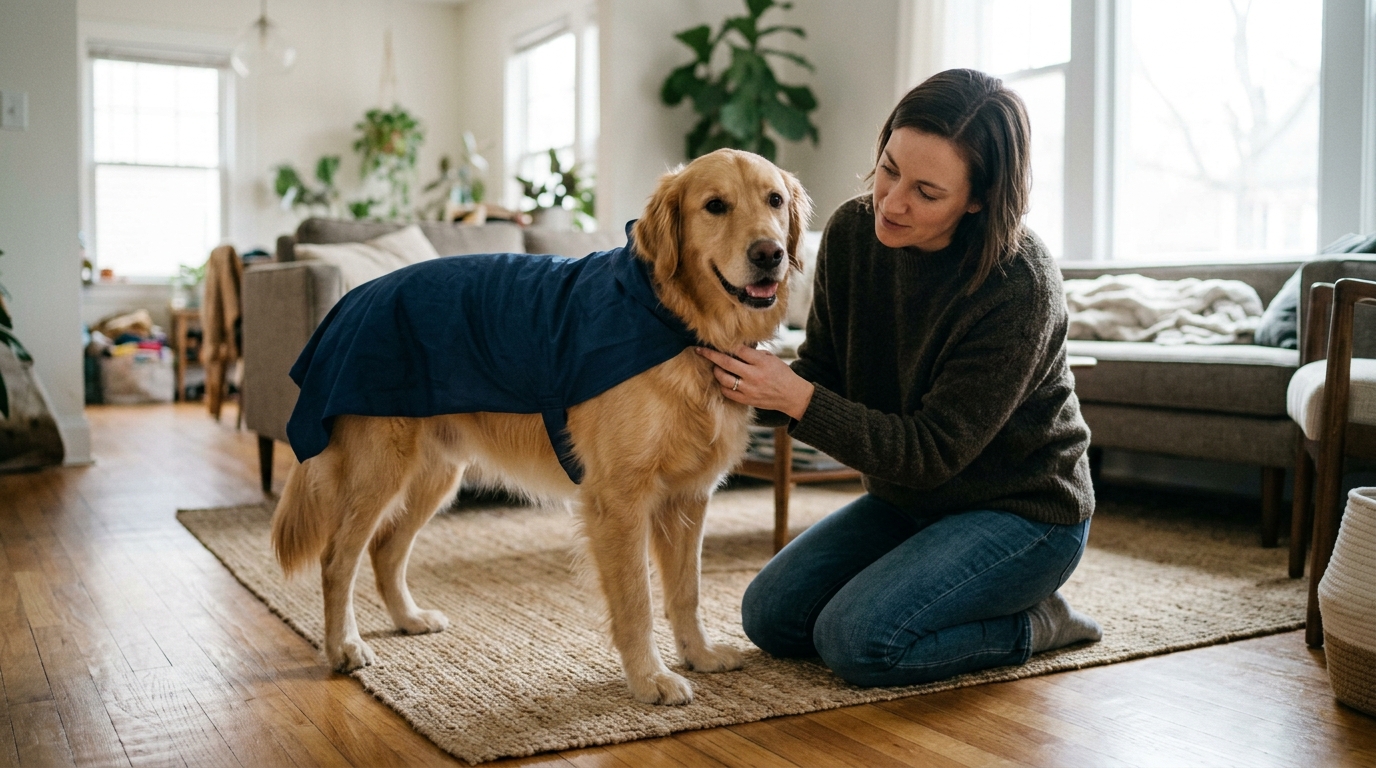
Try the costume on well before Halloween in a familiar, quiet place. Watch your dog’s whole body, not only their tail. A tucked tail, ears held back, lip licking, yawning, pacing, shaking, panting, wide eyes, or repeated attempts to remove the outfit can signal discomfort. If you see those signs, calmly take the costume off and choose a costume-free celebration instead.
Our guide to What Your Dog’s Body Language Is Really Telling You can help you recognize the subtle signals that matter before stress grows. Give your dog room to move away, and avoid asking children or guests to pose with a dog that wants space.
Check costume fit and safety
If your dog genuinely seems relaxed, inspect the costume before every use. It should not limit vision, hearing, breathing, barking, eating, toileting, or normal movement. Avoid masks, tight hoods, dangling pieces, loose buttons, small accessories, and anything your dog could chew or swallow. Never leave a costumed dog unsupervised.
The American Veterinary Medical Association Halloween guidance recommends choosing a costume that fits comfortably, has no easily chewed-off parts, and does not interfere with a pet’s senses or movement. Keep the first session short. Reward calm behavior, then remove the costume before your dog becomes restless.
Create a Calm Space Before Visitors Arrive
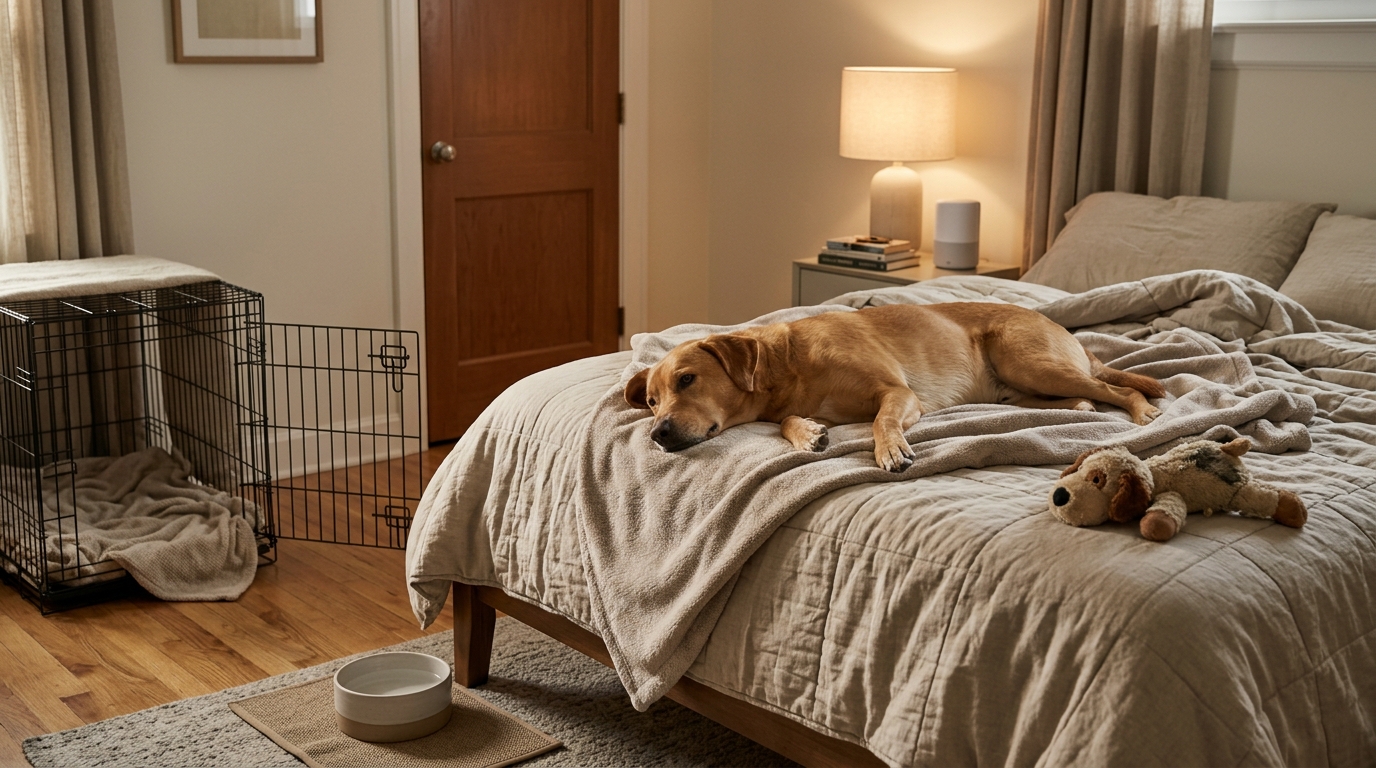
For most dogs, the safest place during peak trick-or-treating hours is away from the front door. Set up a quiet room before the first knock. Close curtains if outside movement is exciting, play gentle background sound if it helps mask doorbells, and leave water, familiar bedding, and a safe comfort item available.
Make the room feel familiar
Choose a place your dog already uses for resting. A bed, open crate, or gated area can work if your dog is comfortable there. Do not suddenly confine a dog who is afraid of being enclosed. The room should be a retreat, not a punishment. Let your dog settle there with you briefly before guests arrive.
A food puzzle or chew can give a relaxed dog something positive to do, but do not expect enrichment to solve fear. Some anxious dogs will not eat when stressed. If your dog usually enjoys independent activities, use a familiar option rather than introducing a new toy on a busy night. For additional calm activity ideas, see Sniff Walks and Decompression Walks.
Plan for doorbells and guests
Tell family members that the dog’s quiet room is off-limits. Consider placing a note on the door asking visitors not to knock, or sit outside to hand out candy if that is safe for your household. Keep visitors from opening the dog’s room or feeding treats through a gate. Predictability can prevent an anxious dog from feeling trapped or responsible for managing the crowd.
Keep Candy and Decorations Out of Reach
Halloween treats are for people, not dogs. Chocolate can be dangerous, and sugar-free candy or gum may contain xylitol, a sweetener that can cause serious problems in dogs. Raisins, wrapped candy, and rich treats can also lead to illness. The risk is not limited to the candy itself. Foil, plastic, cellophane, sticks, and small toys can become choking or intestinal-obstruction hazards.
Put candy bowls high and behind a closed door when they are not being used. Ask children to keep their trick-or-treat bags out of bedrooms and off the floor. Check sofas, car seats, coat pockets, and entry tables before bed. The ASPCA Halloween safety tips also advise keeping chocolate, xylitol-containing candy, and small costume pieces away from pets.
Choose dog-safe decorations
Use flameless candles instead of lit jack-o-lanterns where possible. Keep candles, electrical cords, batteries, glow sticks, fake cobwebs, corn cobs, and breakable decorations out of reach. Secure decorations so a curious tail or passing leash cannot pull them down. If you decorate a yard, check it before and after the event for dropped candy, wires, or sharp pieces.
For more simple ways to reduce household hazards throughout the year, visit Essential Tips to Keep Your Pup Protected. Halloween works best when safety steps are prepared before the house becomes busy.
Prevent Escapes and Stressful Walks
Halloween creates more chances for a dog to slip out an open door. Make sure your dog’s collar tag and microchip registration have current contact details before the evening starts. Keep a leash near the door, even if your dog is usually reliable indoors. If guests must enter or leave, keep your dog in their quiet space or securely on a leash with a trusted adult.
Skip the trick-or-treat route when needed
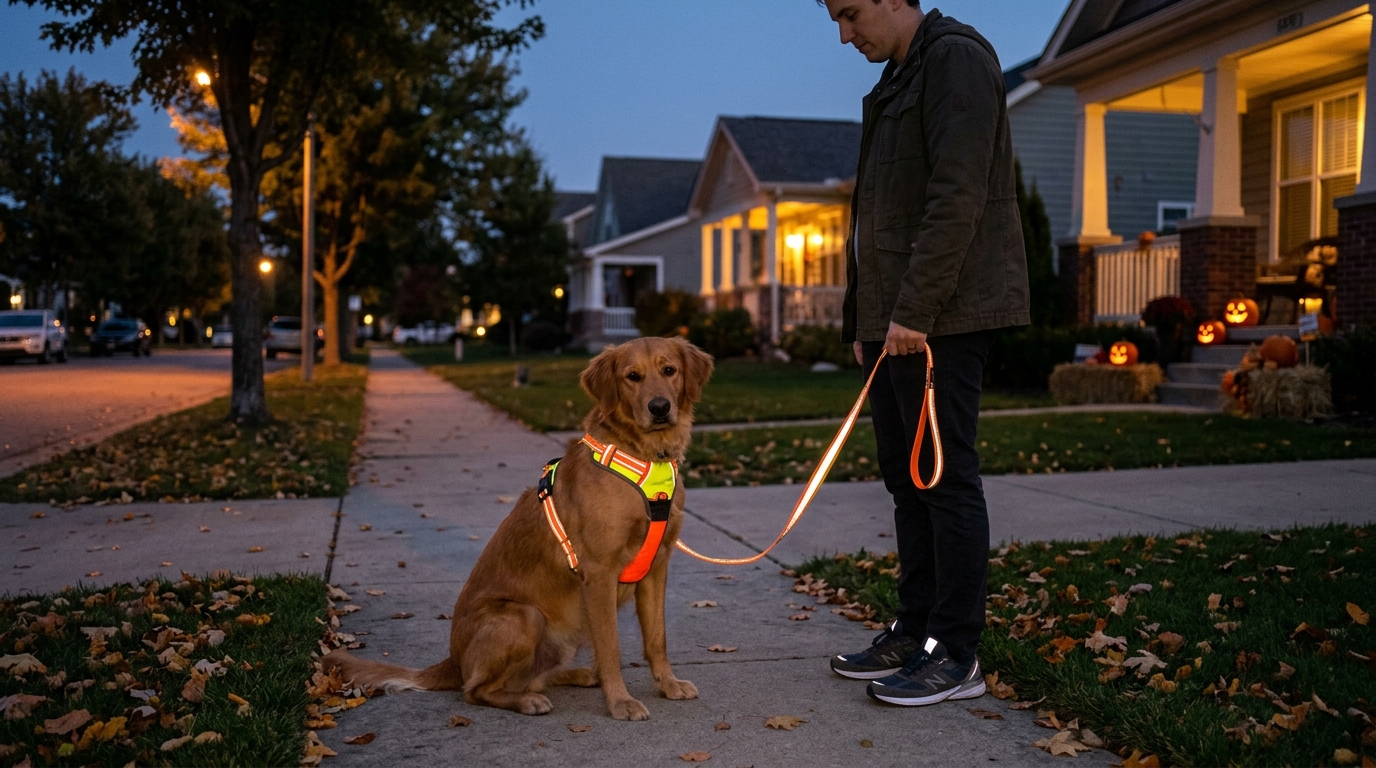
A busy route is not a good test of bravery. Costumes can look unfamiliar, children may move unpredictably, and sudden noises can startle even friendly dogs. A shorter walk before the busiest hours is often the better choice. Use a reflective collar, harness, or leash after dark, and avoid forcing greetings with strangers.
If your dog has a history of intense fear, growling, snapping, or escape attempts around visitors, speak with your veterinarian well before Halloween. A personalized plan is safer than trying a new strategy at the door while the neighborhood is busy.
Know What to Do After a Possible Ingestion
If you think your dog has eaten candy, a wrapper, a battery, a decoration, or another potentially harmful item, remove any remaining material if it is safe to do so and contact your veterinarian or an emergency veterinary clinic promptly. Keep the package, ingredient list, and an estimate of what may have been eaten available for the veterinary team. Do not wait for symptoms, induce vomiting, or give a home remedy unless a veterinary professional specifically tells you to do so.
The ASPCA Poison Control is available 24 hours a day for animal poisoning concerns. Call (888) 426-4435 if you suspect an exposure. A consultation fee may apply. Trouble breathing, collapse, seizures, or severe weakness require emergency veterinary care.
Enjoy a Dog-Friendly Halloween
A successful Halloween may look simple: a comfortable dog, a secure home, and no need to manage a costume or crowd. Prepare a quiet space, keep human treats locked away, secure doors, and respect your dog’s signals. These choices give your dog a safer evening and give you more time to enjoy the celebration without worry.